Nicolas Perez
I'm a Game Design student at HKU, and I love getting into the minds of players, thinking how they think and having them feel what I want them to feel.
I love to make games and write. I've done a talk at Godotcon too, and volunteered several times at conventions like Indigo. You might have also met me at a DGA Network event!

Featured Projects

Window Experiments
Gameplay Design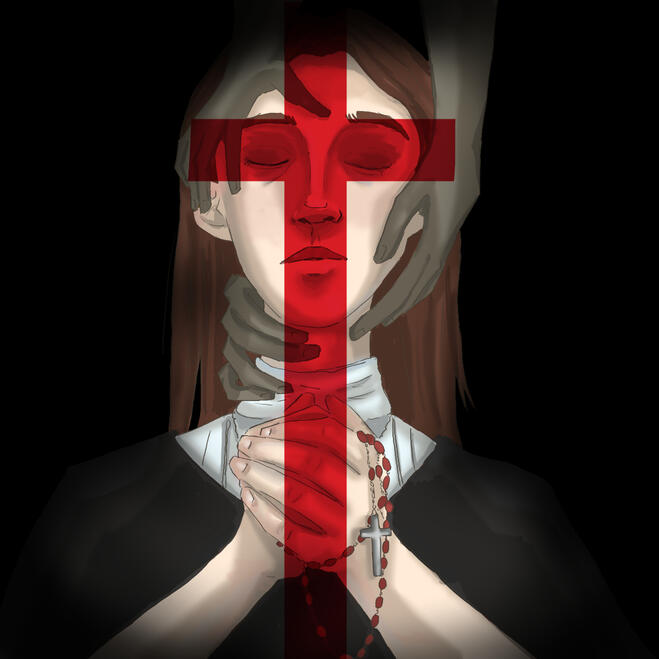
Blind Faith
Level/Gameplay/Narrative Design
You Are That Now
Level/Gameplay Design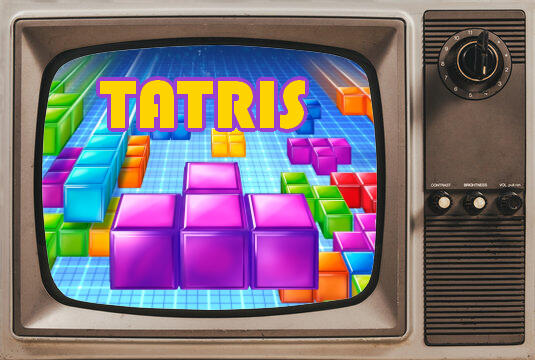
Tatris
Narrative/Gameplay Design
Solster
Narrative Design
Graffiti City
Level/Gameplay/Narrative Design
More Work
Card Games
Gameplay Design
Written Stories
Narrative Design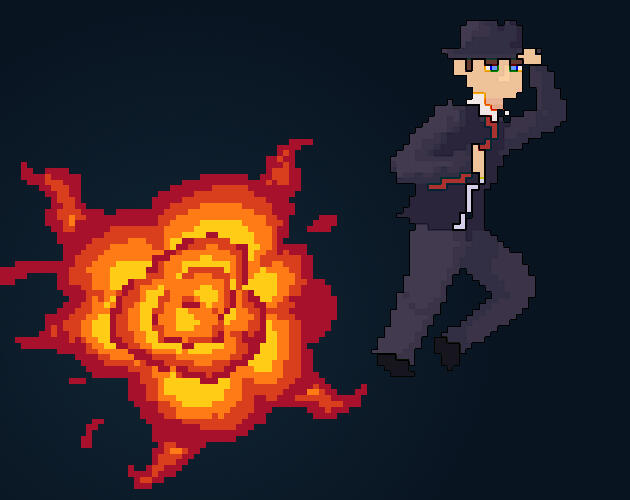
Other Projects
About Me
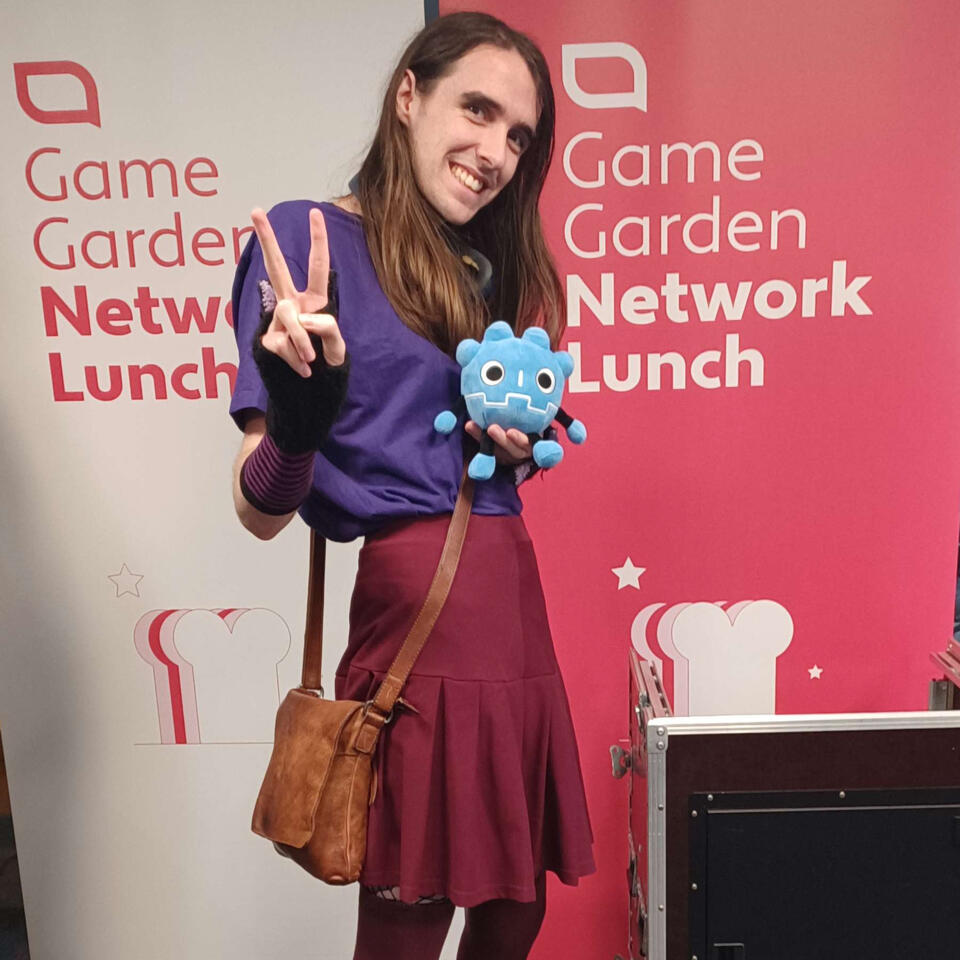
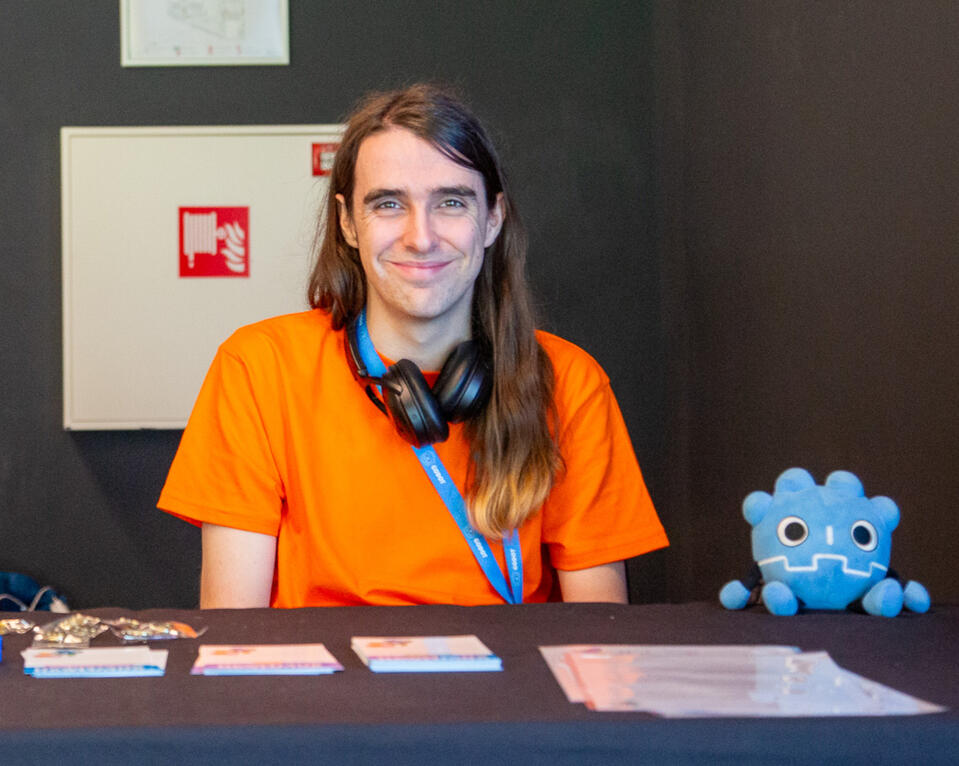
Hi! I'm Nico. I'm a half-Spanish, half-Dutch game designer and writer who loves unique games and a good mystery.Ever since I was a kid, I've been fascinated by games in many ways.
I love examining how they are built as a big puzzle where each piece fits into another, and how the player's mind and decisions fit into it.
I love creating stories as well, and just as with games, my curiosity is what fuels my writing.I tackle design in a very analytical, intentional manner, but with the goal of creating an emotional experience for players that feels naturally born.
I see it as both a science and an art, a concrete process to create an abstract result: To reach into the player's mind.Some of my biggest inspirations are indie developers such as Daniel Mullins (Inscryption, Pony Island), Lucas Pope (Papers Please, Return of the Obra Dinn), and Edmund McMillen (Binding of Isaac, Mewgenics).
As a writer and narrative designer, Disco Elysium and Fallen London are another two of my biggest inspirations too.I love working on games of all sorts, as long as they have something original to set them apart, and I love finding what makes a game unique.
Skills
Engines: Unity, Godot, Monogame
Programming: C#, GDScript, and Haskell programming
Other Programs: Obsidian, Miro, Canva, Trello, Git
Gameplay Design, Level Design, Narrative Design
Writing
Experienced with Scrum framework
Soft Skills (Communication, teamwork)
Languages: English, Dutch, Spanish
Other Experience
Bachelor's degree in Computer Science from Utrecht University (2019-2025)
Game Design Student at HKU (2023 - Present)
Volunteered 4 times at INDIGO in 2026, 2025, 2024, and 2023.
Volunteered at Dutch Game Day 2024
Gave a lightning talk at Godotcon Amsterdam 2026, and volunteered at the convention as well
Social Media and Contact
I can be reached through email at [email protected]I am also active on Discord (niconickname), Bluesky, and LinkedIn.You can find some of my games including older projects on my itch.io at niconickname.itch.io
SOLSTER
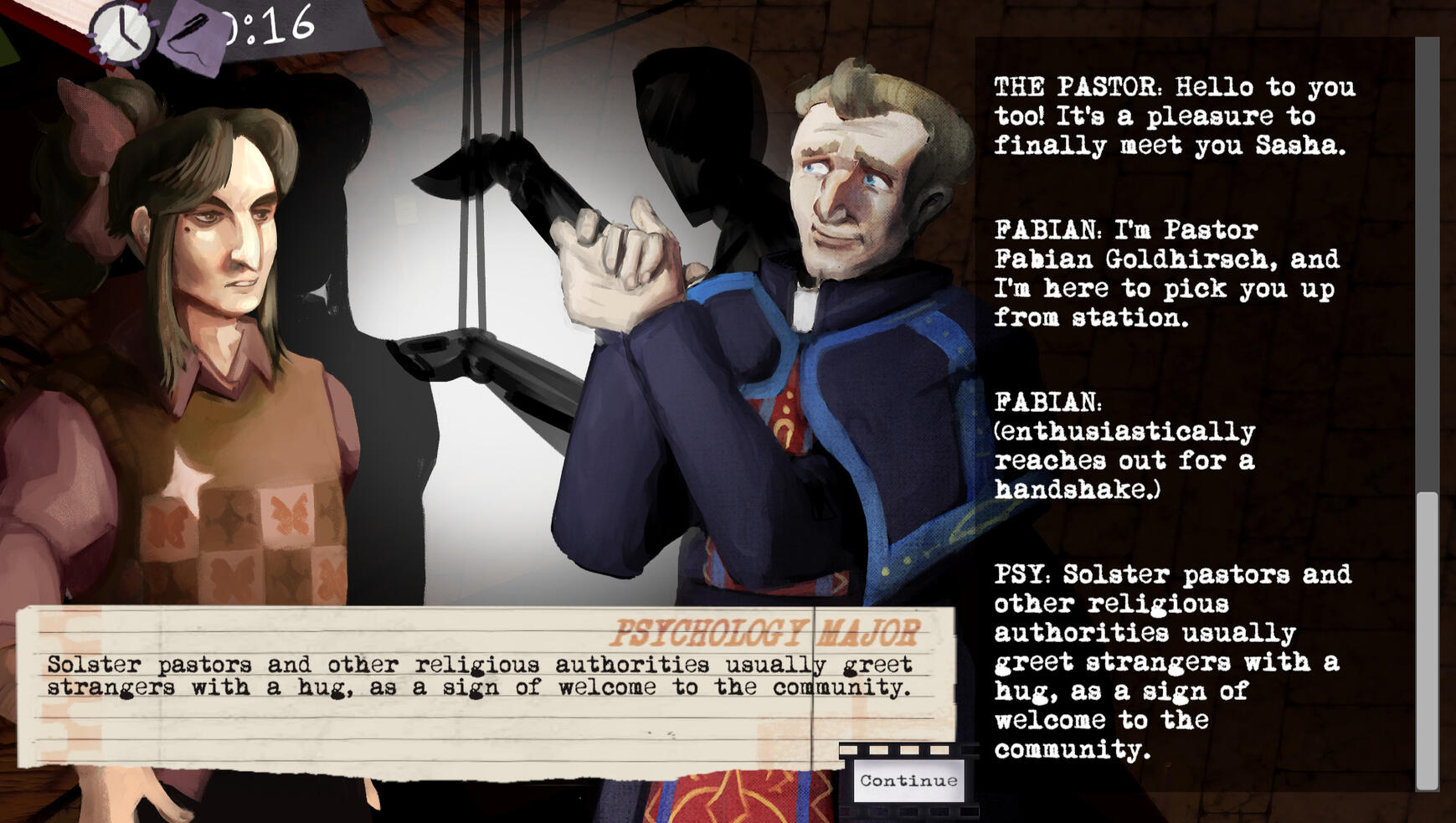
WHAT IS IT?: A demo for a narrative adventure game where you play as a college graduate returning to their strange supernatural home town, and trying to save it from disaster in a one-day time loop. Gameplay primarily consists of dialogue and exploration, with some planned features for the full version version such as 'mind inventory' to store information between loops. The full game is still in development.
HOW WAS IT MADE?: It was made in Unity in 9 weeks with a team of 9 people: 4 Artists, 3 Designers, 1 Developer, and 1 Composer. My main role was narrative and gameplay design, working together with the other designers. I did a large amount of writing for the game, as well as designing quests and general story structure together with the design lead.
WHAT I LEARNT: I got a lot of experience with game writing, as well as other aspects of narrative design such as quest design and game narrative structure. I also learnt how to work in a tightly organized team with a producer, with the project lead acting as producer. This was the most structured and organized group project I've worked on, and I feel I learnt a lot about teamwork from it.
LINK TO THE GAME: The game is currently not available online
MY DESIGN PROCESS
Solster is a narrative adventure game where a college graduate returns to their remote birth town, and becomes stuck in a time loop as the town is destroyed at the end of the day. Its main theme is trauma, religious and generational.I worked on a demo of it for a HKU project. I was a narrative/gameplay designer for this game, mainly working together with the project lead and another designer to design the game's quests and progression, as well as writing dialogue for several characters and events.When I joined the project, the lead already had a document written outlining the setting of the story, some important characters, and the base idea of the game's story (that being of trying to stop a time loop). I started making various concepts for characters that could exist in the world, with the focus of having them reflect the theme of trauma that we wanted in the game.

An example of an initial character concept I wrote, for the first stages of figuring out what our cast of characters would look like

A example of later shorter summaries I wrote for myself for the characters whose dialogue I wrote, to remember their tone and attitude


After further meetings and discussion with the design team, we decided which characters would be in the game, and split which characters each designer would write the dialogue for. I tackled Aaldenburg, Wisteria, and Fabian, who is the first character you speak.
I continued working with the design lead to plan out the sequence of events and actions that the player would go through during the game.I wrote the dialogue on a google doc, split into pages for different characters. From early on I formatted my dialogue in the way that Yarnspinner, the Unity tool we utilized to implement dialogue in the game, would use.
I had done writing for games before this, but never to this scale, so it was a learning experience for the importance of thinking ahead and structuring your writing to make it easy to implement directly into the game, as well as easy to find specific parts and make changes.Once development was advanced enough, I started implementing my dialogue into the game myself, and seeing how well it flowed in practice to make adjustments as needed.I used color coding for dialogue that changed depending on which Major (character archetype) the player chose, but on hindsight I could have used color coding more to make it easier to see which dialogue choices connected to which results. I'm open to using other tools too, such as Miro or Obsidian, for future projects since I found it was difficult to follow a dialogue tree structure in a google doc, since it is all in one vertical line.

Example of how I wrote dialogue

Example of how I wrote dialogue


Example of dialogue I wrote

Example of dialogue I wrote


BLIND FAITH
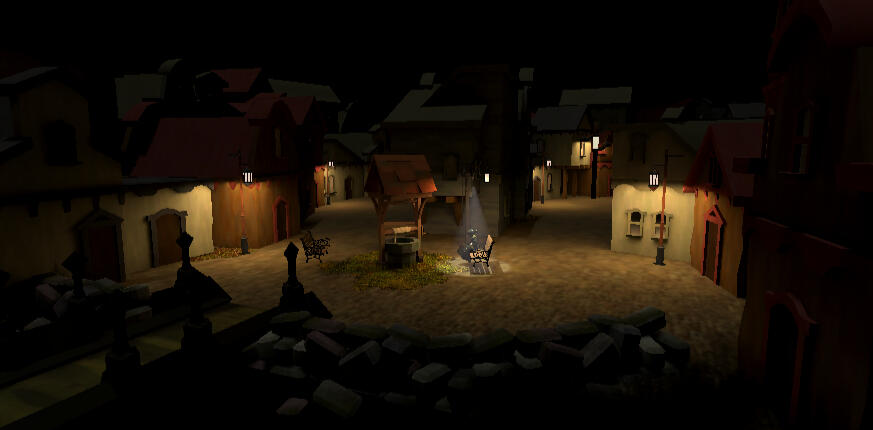
WHAT IS IT?: Blind Faith is a PSX-style horror adventure game about exploring a mansion previously inhabited by a cult. There is a mechanic where the player can pray at altars to reset their increasing stress and make the monster disappear, but this protection is suddenly removed at the very end forcing the player to just run to the exit.
HOW WAS IT MADE?: It was made in Unity in 9 weeks with a 4 person team. I was the lead level designer as well as working on gameplay and narrative design together with the project lead. I worked on this game at the same time as Solster, and two other members of the team were also working on that too.
WHAT I LEARNT: I learnt a lot about horror design, got more experience with 3d level design and 3d blockouts, and with working on gameplay, level, and narrative design in one game. I also got more confident in my teamwork skills, communicating with developers and artists about what is important for the design.
LINK TO THE GAME: sleepdevrived.itch.io/blind-faith
MY DESIGN PROCESS
After our initial meetings where we decided the theme of the game and the main mechanic (praying at altars), I created a timeline of events in the game. This contained the sequence of actions the player should perform to complete the game, and mapped out through which locations the player moved and how tension would rise and lower throughout.The game was built around two specific moments in mind: The first encounter with the monster, and the moment where the praying mechanic would suddenly no longer work. The rest of the game was setup to build up tension for those moments, and to let the player cathartically release that tension through a subsequent chase.

Timeline of the game, including the player's objectives, what actions the player must do to progress, locations they go through, and the rising and falling tension and intended emotional state at each section of the game

I created blockouts of the layouts of the various floors of the house, keeping in mind how the player would traverse through them and what they would be thinking and feeling at each point.For instance, when the player enters the main foyer, they see the stairs to the top floor directly ahead, but broken, hinting they need to find a way up. On the right, a blocked door shows stairs on the other side, giving the player a goal to find their way into that room, without explicitly telling them to.
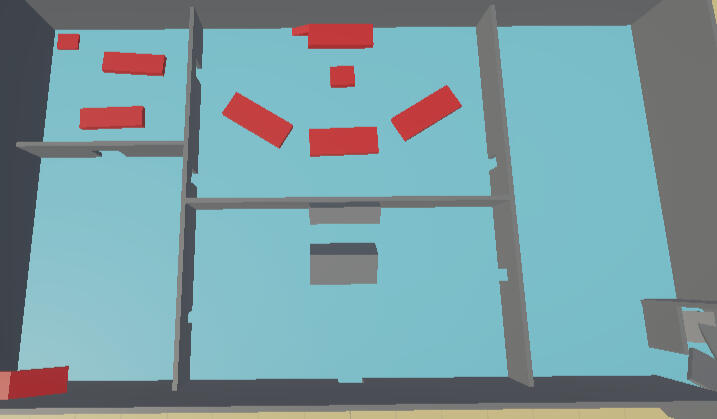
First blockout of the bottom floor of the mansion. I added more furniture and decorations later after more iteration

The house exterior, modeled by a teammate based on my blockout design


Later I added assets and textures to fill out the blockouts and create the final level layouts. I shared my blockouts with the team, with added notes and explanations of my design choices to get their feedback and make sure we were on the same page.In team projects, I want to make sure other people know the reasoning behind my design and what I am trying to make the player do, think, and feel at each moment of the game.
Usually I do so with notes and design docs, Miro, screenshots, or just notebook sketches depending on the situation when visuals are needed.

Layout of the top floor prior to adding furniture/assets, with notes written both for myself and for the rest of the team

Layout of the attic, with some notes added for the rest of the team to explain/point out my design choices
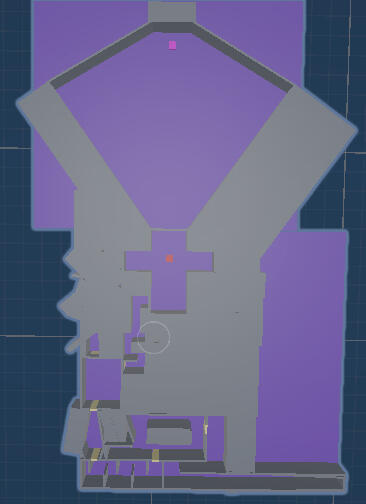
Layout of the attic on the return trip. The escape of the attic is frantic and stressful, the player should not take time to stop and think, so all dead ends are cut out to let them just run. The final hallway is made extra long for added tension too.


CARD GAMES
I have worked on several card games, and enjoy coming up with card games in general in my free time. I'm a huge fan of card games such as Magic the Gathering and their design, so I often think about how they are built and balanced. Here are the card games that I have formally worked on as a full project, beyond just abstract concepting.
NAME OF THE GAME: FOLLOW ME
WHAT IS IT?: A 1v1 deckbuilding card battler where you build a cult by placing followers on a grid around your cult leader, then commanding them to gain worship and attack your opponent's cult
HOW WAS IT MADE?: Currently still in development for 7 weeks, working in a team of 5 people (3 artists, 1 developer, 1 designer) as a project for Little Chicken built in their upcoming Card Game Arena game engine. I am the lead designer of the game and co-developer.
WHAT I LEARNT: Having to learn a new engine for this game, one that is still in development and low in documentation, has taught me a lot about how to learn new tools through experimentation and through tutelage of another more experienced in the tool.
I have improved a lot in gameplay design (especially in card game deisgn), through gradually balancing the game with playtests and iterations, and I have learnt a foundation on visual scripting
LINK TO THE GAME: The game is not yet available online.
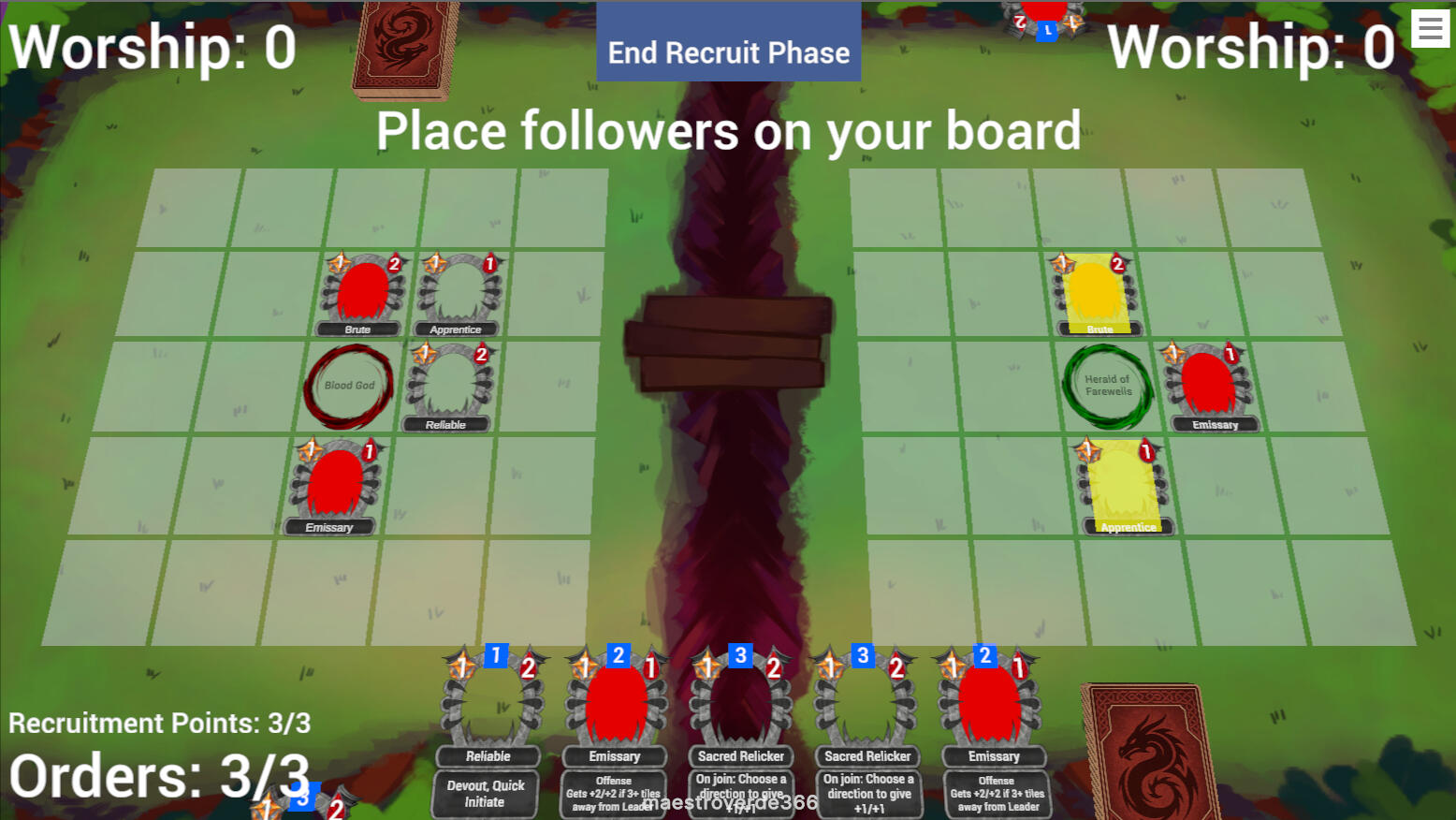
This is my current project I am working on in a team for a school project, made to test Little Chicken's upcoming Card Game Arena engine for making card games. After a couple months where we mainly experimented with the engine, recreating existing card games and giving feedback about the engine to our client, we begun working on making a larger scale game in the engine.We had received the request to make the game a deckbuilder, and we had decided we wanted our game to feature placing cards in a grid since it was something we wanted to test the engine's capability for more thoroughly. We came to our concept of a cult game through brainstorming with the team and merging our ideas together. Afterwards, I drafted the rules for the game and made an initial set of cards. I was very excited about the concept, since it was a game that had a lot of room for expansion and a lot of design space, but I held myself back from trying to add too many cards or mechanics at once since that was a mistake I had made in previous card games I made.With the minimum amount of cards and mechanics to make the game playable, I begun playtesting and iterating on the game together with the lead developer, refining the design and adding more cards and mechanics gradually if we saw them necessary to balance the game or to fill gaps.
The process was difficult, since there were a lot of pieces that all affect each other. Changing one card or mechanic has a ripple effect that might imbalance something else in the game every time we try to fix a problem. Counterintuitively to what I had expected, the game proved to be easier to balance when there were more cards rather than fewer. Though that meant more elements interacting, it also meant more ways of keeping overpowered or unfun strategies in check. The version of the game as it currently is is quite balanced in the eyes of our playtesters, and in their and my opinion, fun. The game is not truly perfectly balanced, but I believe a game "feeling" balanced is much more important than it actually being balanced. What the players think and feel while playing the game is king.
NAME OF THE GAME: JUNK CARDS
WHAT IS IT?: A two player deckbuilding battler game, where the cards in your deck are your life, and you fight by assembling combos of junk to throw at your opponent. The game alternates between a shop phase where you add cards to your deck, and a battle phase where you try to make your opponent run out of cards by attacking them.
HOW WAS IT MADE?: This was a solo project I made over the course of a month for a HKU Project. It is a physical game. I used Excel and a program called Cardmaker
WHAT I LEARNT: I learnt a lot about card game design, as well as some general design principles such as restraining from trying to add too much content too quick while iterating on the game, and I learnt about effective ways to paper prototype and playtest a physical game
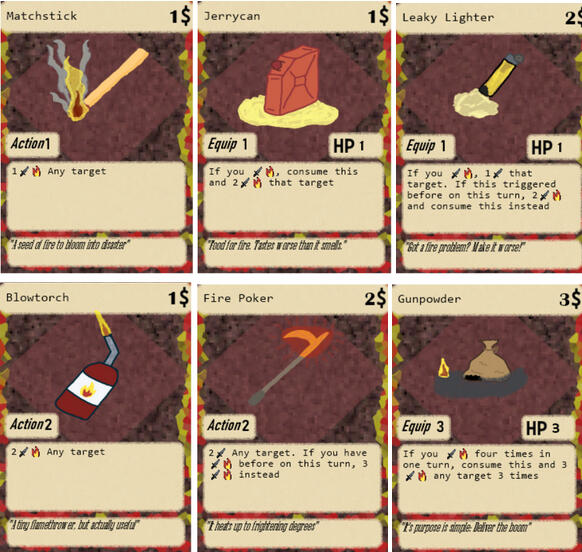
This game was a solo project I came up with for fun, and started actually building for a school project. It was a good example for how I like to apply bottom-up (meaning starting from a mechanic and working out flavour/theme from there) and top-down (starting from flavour and working out mechanics after) design.The design started from combining a bottom-up idea and a top-down idea that I had separately but fit perfectly together.
First, I had seen how in many deckbuilder games, it is always better to have less cards in your deck. I wanted to make a game where how many cards you put in your deck was a meaningful choice, so I thought to make your cards your health. Taking damage means discarding that many cards from your deck, if you run out you lose.
Other mechanics came naturally from developing that idea, such has players drawing a full hand of cards each turn and discarding unused ones after, and from there I got to the flavour of "Players are rummaging through a bag full of random junk, grabbing a handful, then throwing away whatever they didn't use".The other idea I had was from examining the flavour of Magic: The Gathering, which while it is supposed to represent two wizards having a magical duel, mainly consists in practice of summons creatures to fight, which does not feel really like a duel to me. I thought of how Magic would be like if you had no creatures, if it felt more like a duel between two people using items and abilities to fight, and from there I got to mechanics of playing equipment pieces and using them with action cards to perform damaging combos.I have many loose ideas like these often, and I always make sure to note them down for the future. I often pull from these ideas in projects when I need to solve a design problem or need to fill a hole, sometimes years after coming to the idea. This has helped me a lot in coming up with design solutions to problems when making games.
NAME OF THE GAME: OCTOPUS SPAGHETTI
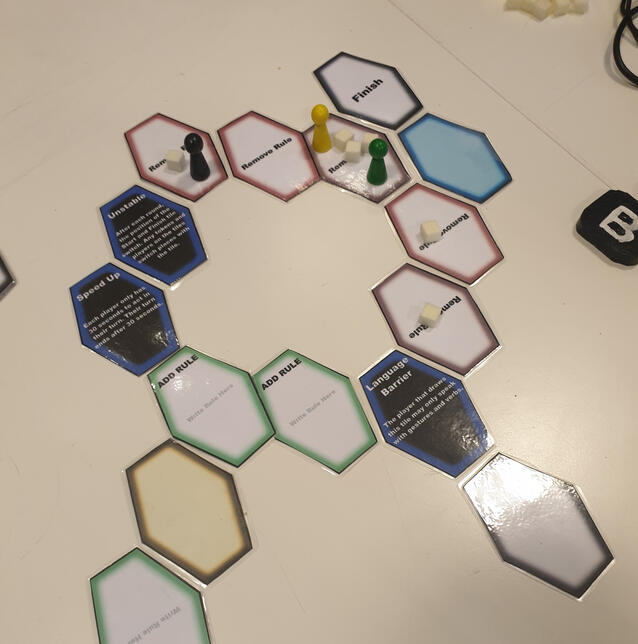
WHAT IS IT?: A game design tool in the form of a freeform boardgame where players build the game itself by placing tiles to form the board, writing rules on them to create the rules of the game, with the goal of creating an interesting but beatable game by the time the start tile is drawn. Complication cards add extra rules that must be worked around as the game goes on too.
HOW WAS IT MADE?: This was made over 2 months in a team of 4 designers. I was one of the designers, working together on iterating towards out final concept, and creating a large amount of "complication" cards for the final game
WHAT I LEARNT: I learnt the importance of not staying too attached to your first concept and staying open to radical changes during the iterative design process. Our final game ended up radically different to our first concept, while still following the same idea of "A game created while you play it"
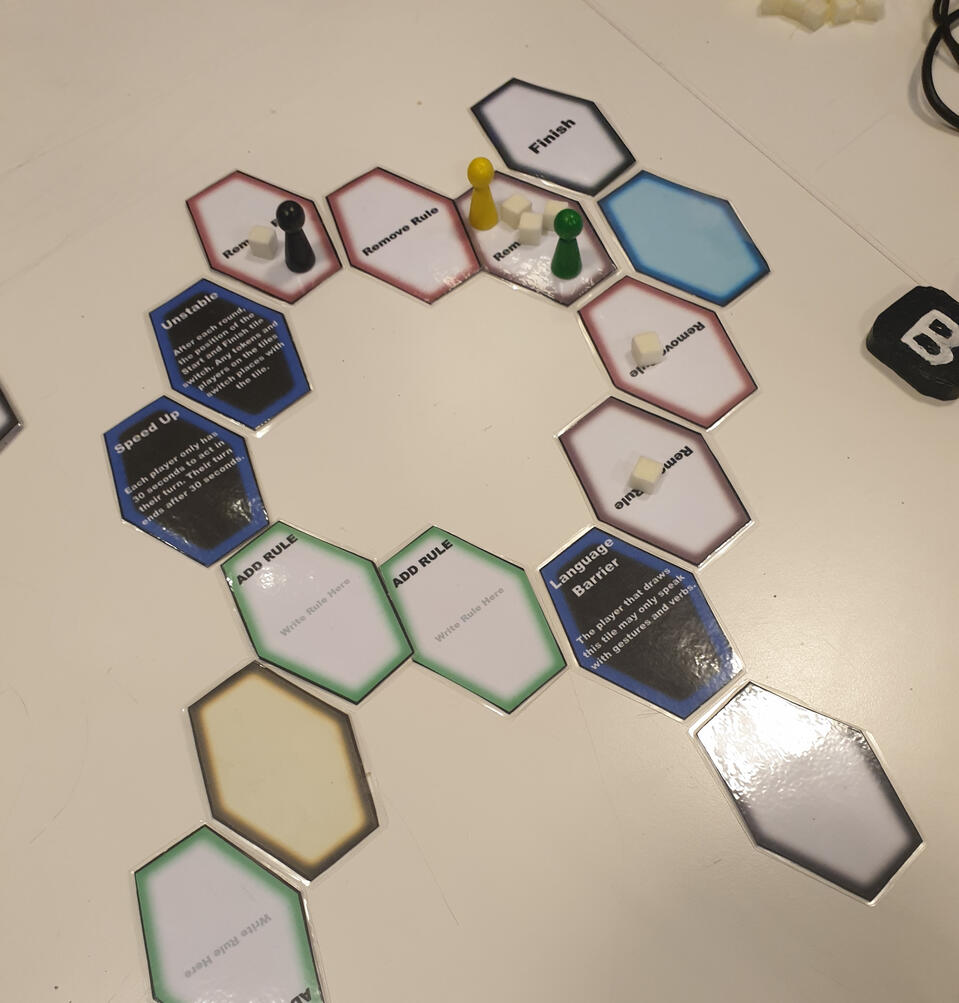
A game I worked with a small team for a school project, where we had to make a game to give beginning game design students more confidence in their design skills. Our concept started as a board game where players could write rules and a victory condition, and were trying to win before their opponents could. Trying to keep a balance where we gave players creative freedom while preventing them from creating rules that instantly won them the game was the most difficult part of the process, and we ended up making the game a cooperative game in the end with a focus more on creative expression. The game also morphed into a card game where players placed cards as tiles to create a game board and write on them to create new game rules.
TATRIS: BLOCK OUT
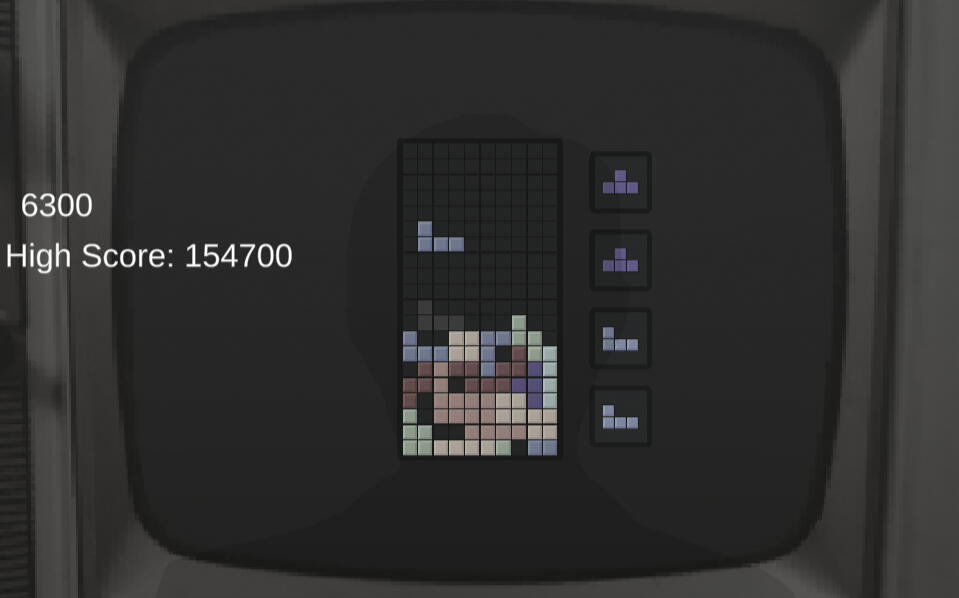
WHAT IS IT?: A narrative game where you play what seems to just be normal Tetris, until various objects from your character's regular life start appearing as blocks in the game, bringing reminders of things that he is trying to escape from and cope with through games.
HOW WAS IT MADE?: It was made in Unity in 2 weeks with a team of 5 people: 1 Developer, 1 Artist, and 3 Designers. I did gameplay and narrative design together with the other designers, and worked on development as well.
WHAT I LEARNT: I learnt how to work together with other designers, brainstorming and experimenting and putting ideas together to get to a strong design. I also got more experience with rapid prototyping and iteration, as well as with conveying narrative through symbolism and non-dialogue forms.
LINK TO THE GAME: niconickname.itch.io/tatris-block-out
MY DESIGN PROCESS
Tatris is an unusual narrative game about unhealthy coping and hiding oneself from reality, through the medium of Tetris. It was a two-week team project, where I did gameplay and narrative design together with two other designers. We got to our concept through brainstorming and ideating together, bouncing off ideas and sharing media we knew that could serve as inspirations. Working with multiple designers was not something I had done before at that time, so I learnt how to work together to get to a good workable design by combining our ideas.We wanted a game where an engaging simple gameplay loop would hook in the player, but then signs of events in the "real world" would begin bleeding into the game, making the player have to choose to engage with them while still being focused on the gameplay loop, to emulate the feeling of trying to distract yourself from real events but being unable to fully block out everything. To fully shape this concept, we did a playtest recreating this in person, by having someone play Suika Game while we tried getting their attention outside the game, eventually surrounding them on all sides.

We assembled notes about the playtest and how the player reacted in a google doc

We made the game in Unity, using an open source Tetris project for the "distracting game" part of the game. My main work in the implementation were adding some of the "real world" leakages, such as an email popping up or someone showing up at your door, as well as adding sound effects and music that begin to fade after a while, slowly leaving the player with eerie electrical buzzing and breathing, reinforcing their loneliness.
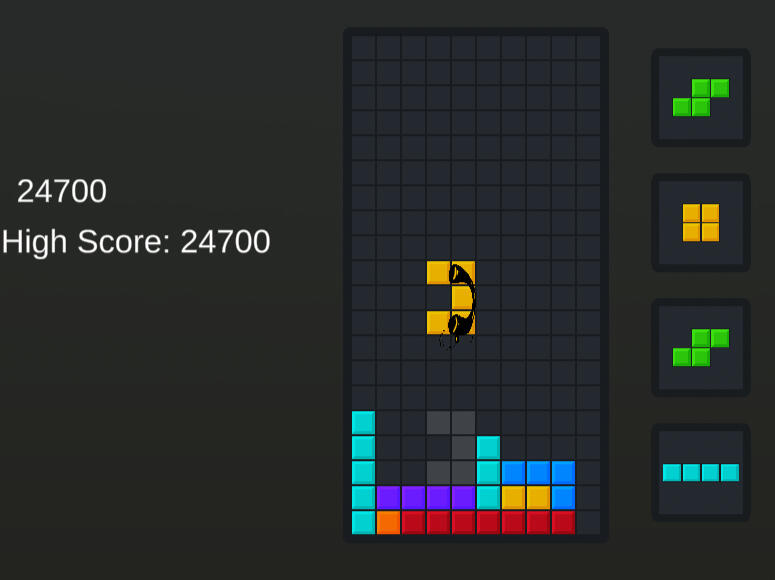
In the middle of a regular tetris game, strange objects like this ringing phone appear

The player can leave it to go to voicemail, or can click on the phone to answer


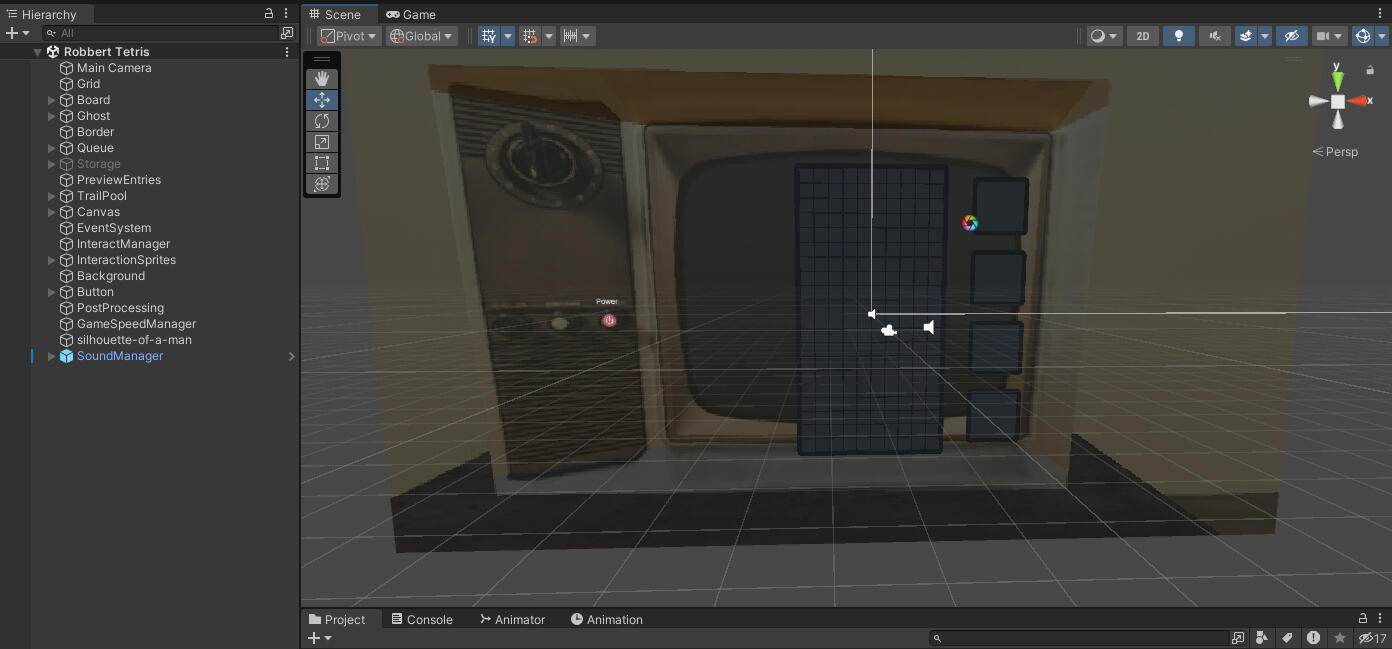
The game plays like a normal game of Tetris, until strange blocks begin to appear, like a phone, a door, an email notification... Clicking on these and interacting with them gives the player glimpses of the outside world, and the camera zooms out further to reveal the TV where the game is being played. Clicking the Off-Button there sends the player to the protagonist's 3D room. We aimed to surprise the player and throw them off-guard, both with the items that appeared and by putting them in a completely different gameplay setting. I was particularly involved in deciding which objects would spawn and in what order, and I chose to try to vary the types of interaction the player would have, keeping them guessing what the next item could be.

The camera zooms out, revealing the TV and eventually the power-off button

When the player presses power-off, they exit into the 3d free-roam environment of the character's appartment


YOU ARE THAT NOW
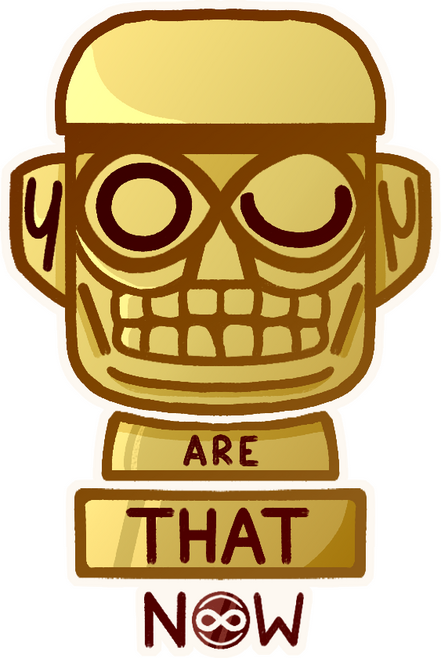
WHAT IS IT?: A short puzzle platformer where every level, you play as something different or the level changes in unexpected ways. The main aim of the game is to surprise the player and make them curious about what might happen in the next level, and how the changing mechanics work.
HOW WAS IT MADE?: The game was made in Unity over two months, after a longer period of iteration and research over 4 months
WHAT I LEARNT: As one of my earlier long projects at the HKU, I learnt a lot about iterative design and experimentation. I also showed this game at the last Dutch Game Garden Network lunch, where I got a lot of useful feedback for future games, and got more comfortable showing my games to others and more confident in my work
LINK TO THE GAME: niconickname.itch.io/you-are-that-now-demo
MY DESIGN PROCESS
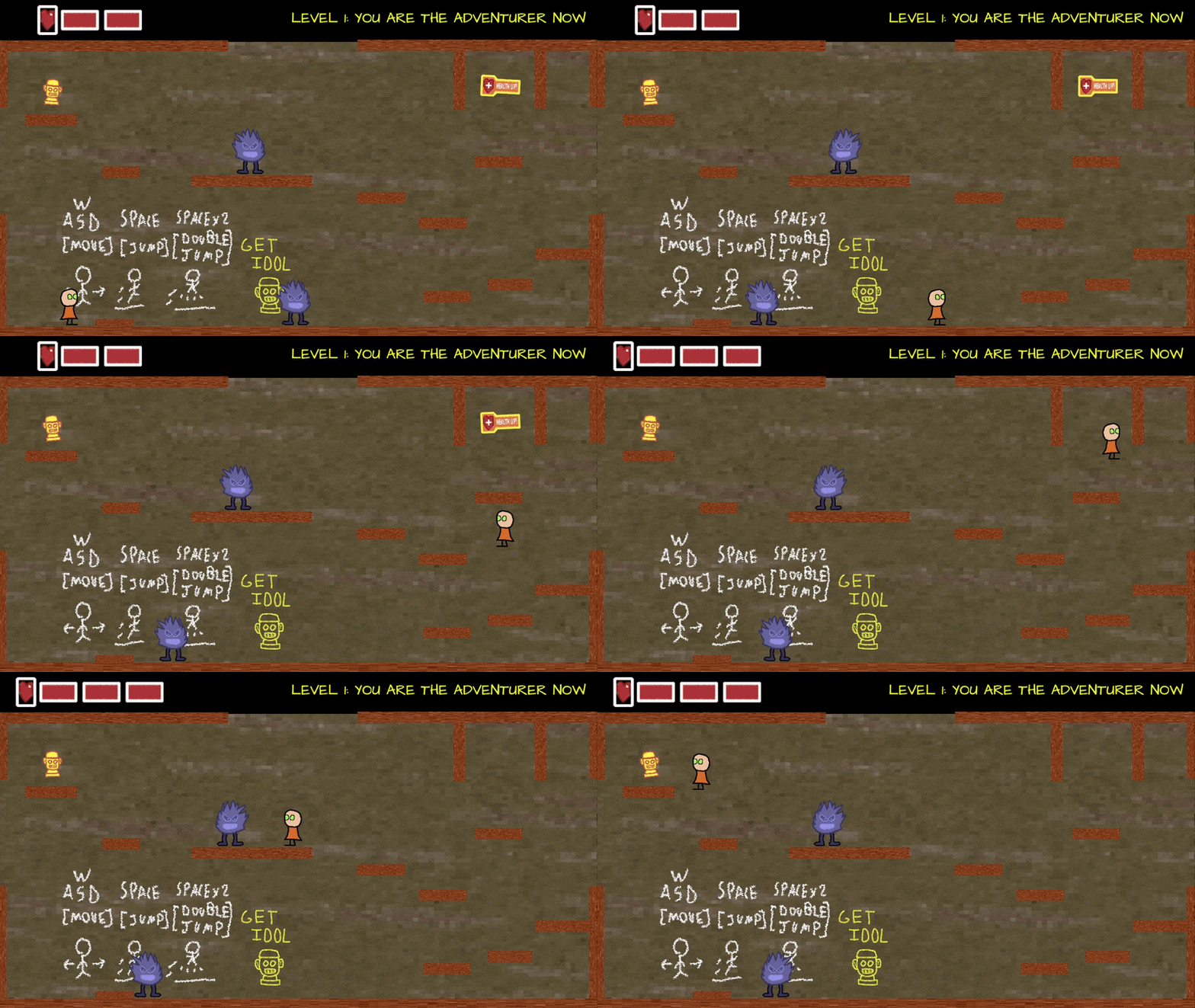
The goal was to make game around a specific sense of curiosity I've experienced in some of my favourite games, the kind that first confuses you, then makes you want to find out what the game is hiding from you.The game itself is a short puzzle platformer where each level changes either what you are playing as, or the context of the level where you are playing. I did not immediately begin with this idea, rather I arrived to it through iteration by trying several experiments and paper prototypes to get an idea of how to make players feel actively curious in the way I wanted. It was once I found an idea with promise through this iterative physical prototyping that I made my first digital prototype, which I then iterated to theI designed the game to have a gradual escalating progression where the player would have their expectation of what could change in each level expanded. It is designed as if it were the first few introduction levels of a larger game, serving as a microcosm of the game as a whole.The first level creates the impression that this is a standard 2d platformer. Since platforming ability is not meant to be the primary skill tested by the game, it is a puzzle game first and platformer second, I made sure to make it forgiving so anyone can beat the level even if they hit both enemies.
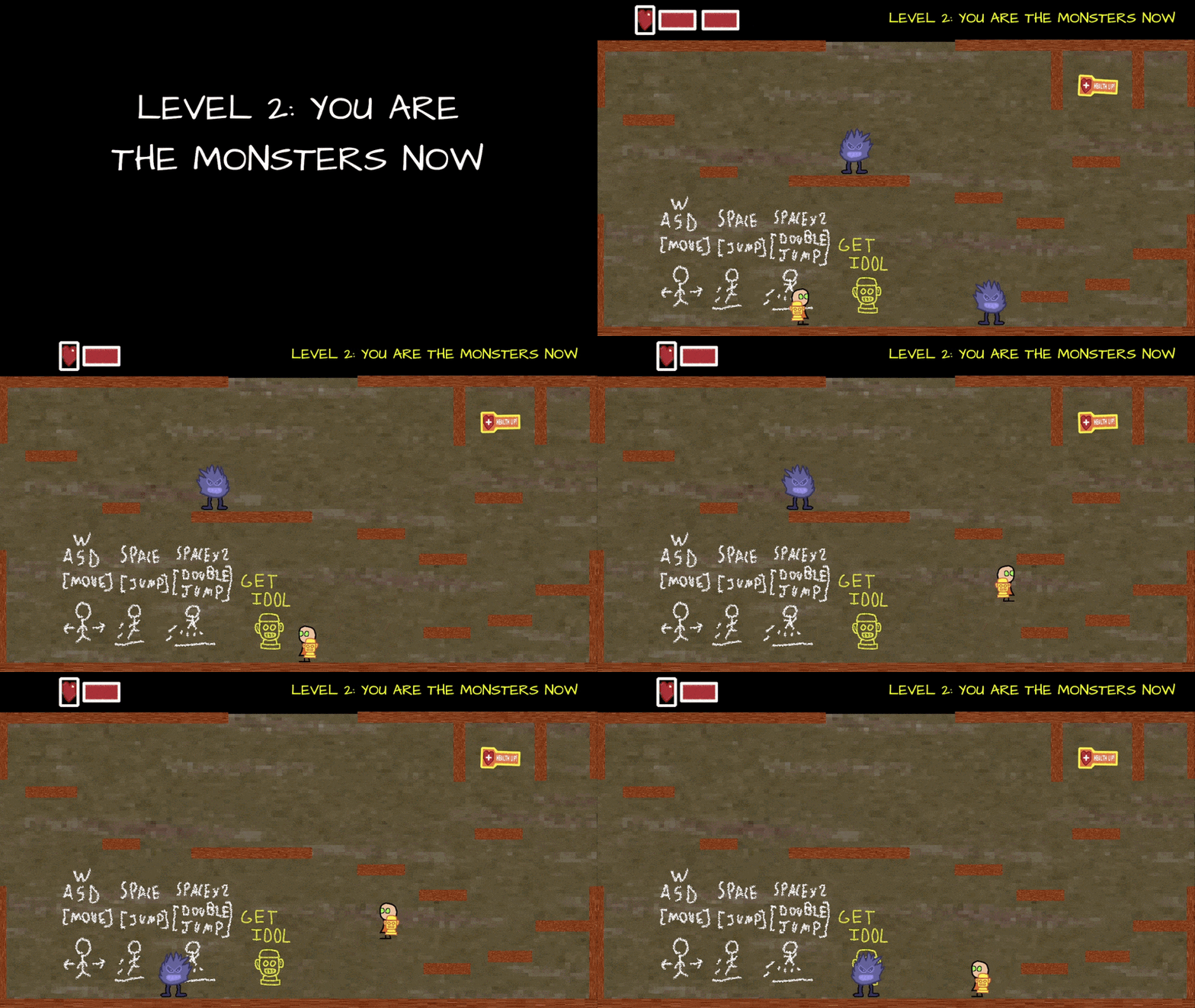
The second level has you play as the monsters of the previous level, showing "You can change to play as any other character in the game". It teaches the player that the means to beat the level by "obtaining the idol" can change each level.
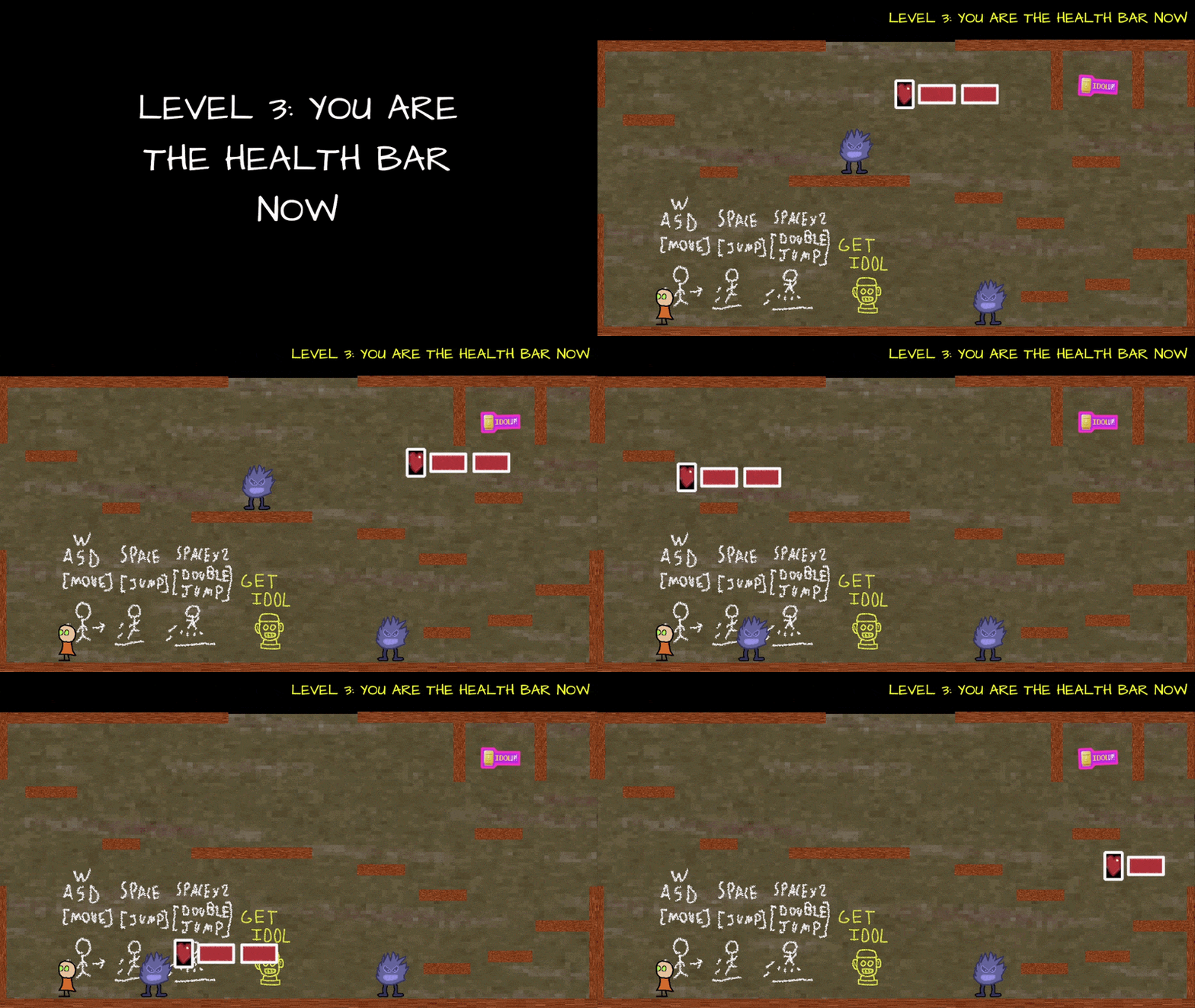
The third level has you play as the health bar, showing "You can play as any object in the game, actually". It also features a puzzle where you must make the "player character" take damage so you can shrink and fit through a gap, getting the player to think of the established game mechanics and level layout from a very different angle.
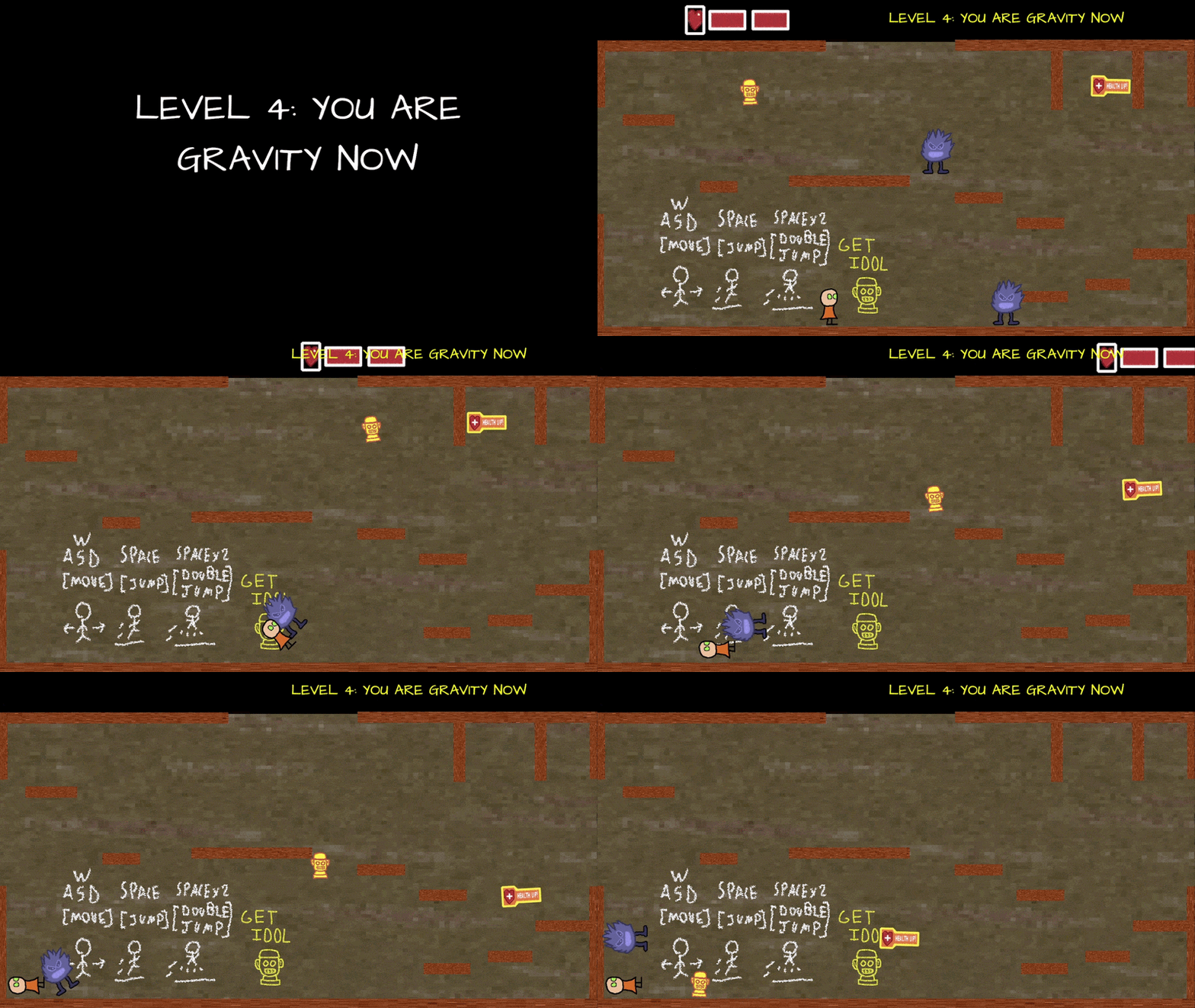
The fourth level has you play as gravity itself, showing "You can also play as abstract non-object concepts too".
The fifth level breaks the established pattern to surprise the player again, showing "instead of playing as something different, the context/circumstances of the level may change instead", by having you play as the adventurer again, but having the idol gone and the holes on the side of the level now lead you to a "backstage" room.
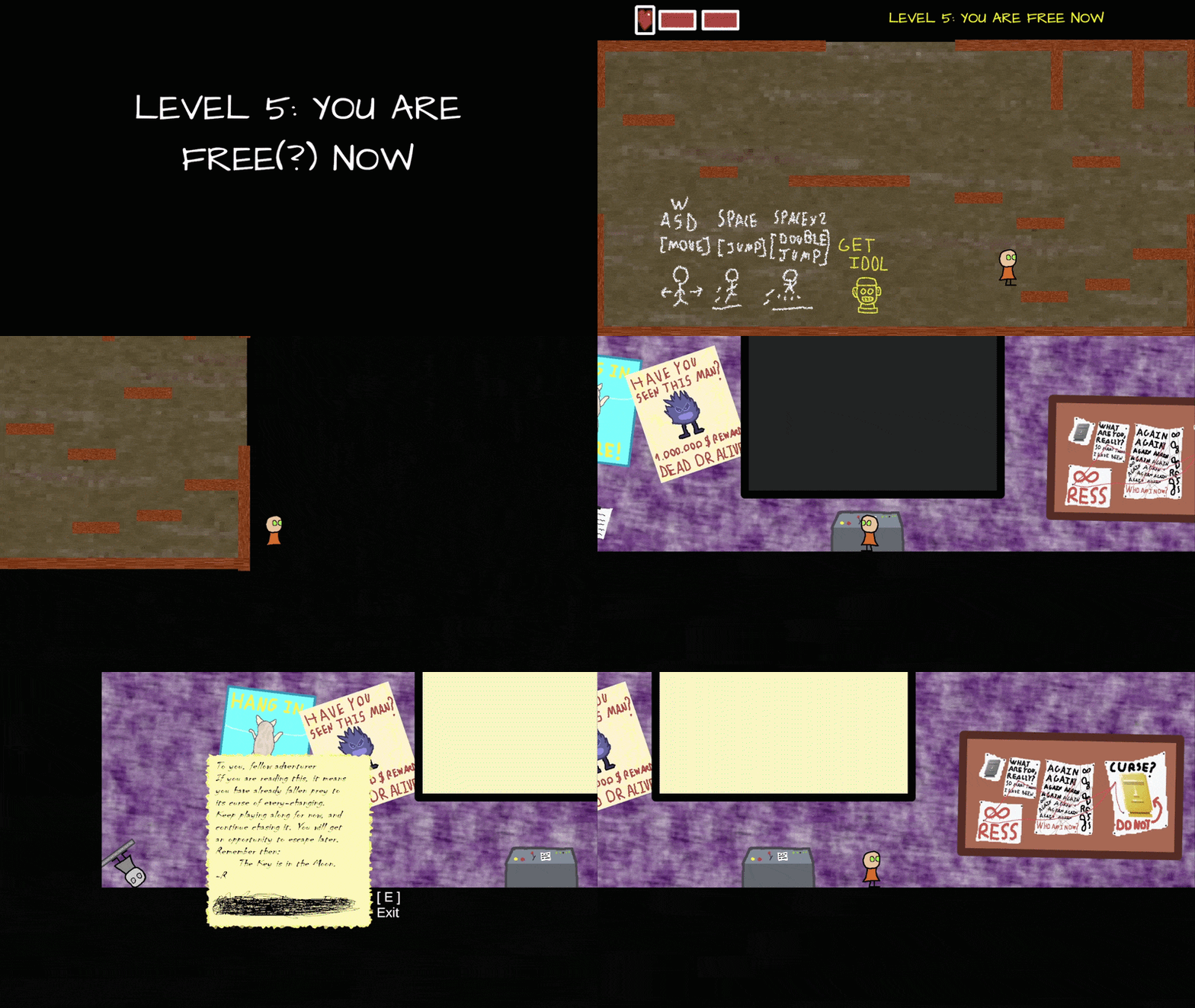
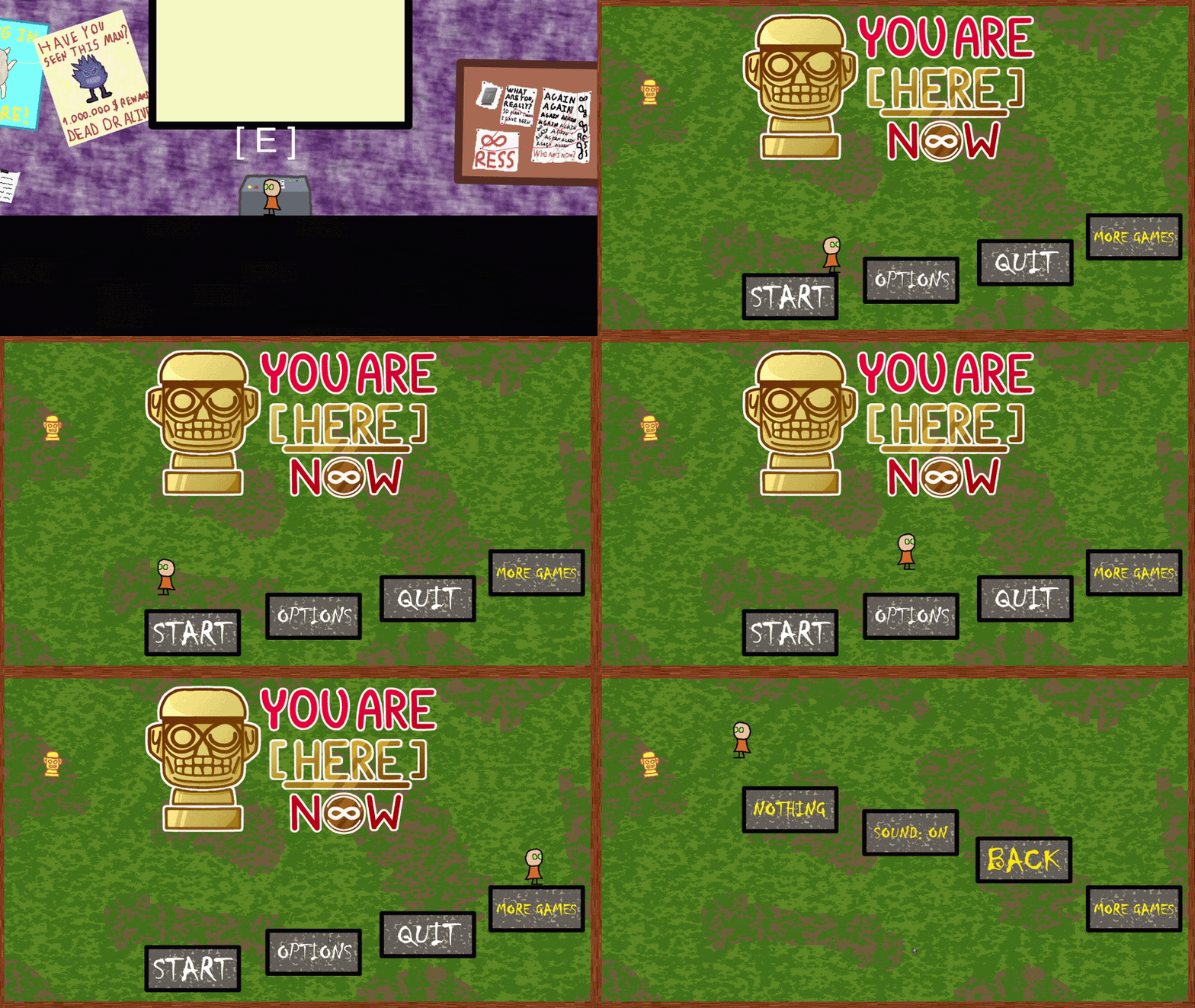
The sixth and final level surprises the player by placing them in the main menu, but now as a level, to fully sink in the idea of "any element in this game can potentially become part of a level, no matter how abstract or how unrelated it may seem". After this sequence of levels, the intention is that the player would be actively curious about what changes the future levels will bring, what game elements will become relevant later, and how each level's new mechanics work.
WINDOW EXPERIMENT
WHAT IS IT?: A prototype made to test out ways of using desktop windows in a game, different ways of making them interact and of making a game with them. Later during Godotcon Amsterdam in April 2026 I gave a talk based on this prototype about how to use desktop windows to make games in Godot.
HOW WAS IT MADE?: I made this over the course of about 2 weeks using Godot, with some additional work over 1 week done specifically for the Godotcon talk.
WHAT I LEARNT: I learnt some Godot functions that I had never used before, as well as how to explore and learn new functions of an engine in general and expand myself.
LINK TO THE GAME: The game is not yet available online. The recording of my talk that I made based on this experiment is here
MY DESIGN PROCESS
The project started when I had an idea for a game split amongst desktop windows interacting with each other.
As my full idea was large in scope, rather than go straight into making the game, I decided to do some experiments to try out different interactions I could do between different windows and to figure out technical execution.
I used Godot, which has a dedicated window management system that made implementation easier than I expected.
I ended up giving a short talk about how to use this window management in Godot during GodotCon Amsterdam 2026. The talk is not yet online, but I learnt more useful things about godot windows afterwards talking to people who saw it.
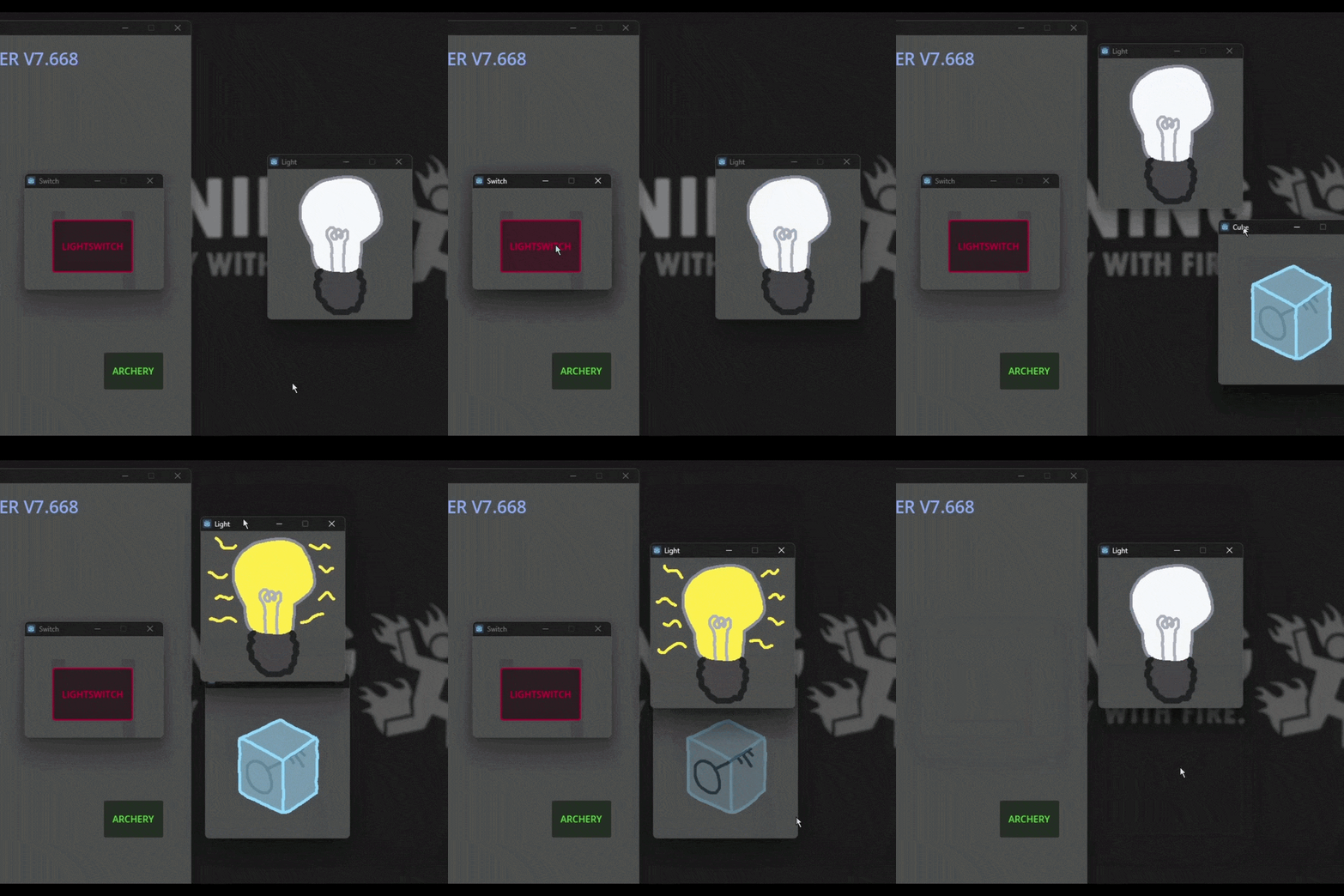
I first begun with some windows that each had an object in them that could interact to make simple puzzles. A lightbulb that could melt an icecube, a bow that could shoot at a target...Using objects with attributes/interactions that players would be familiar with instinctively helps make the initially unintuitive premise of windows interacting with each other easier to grasp.
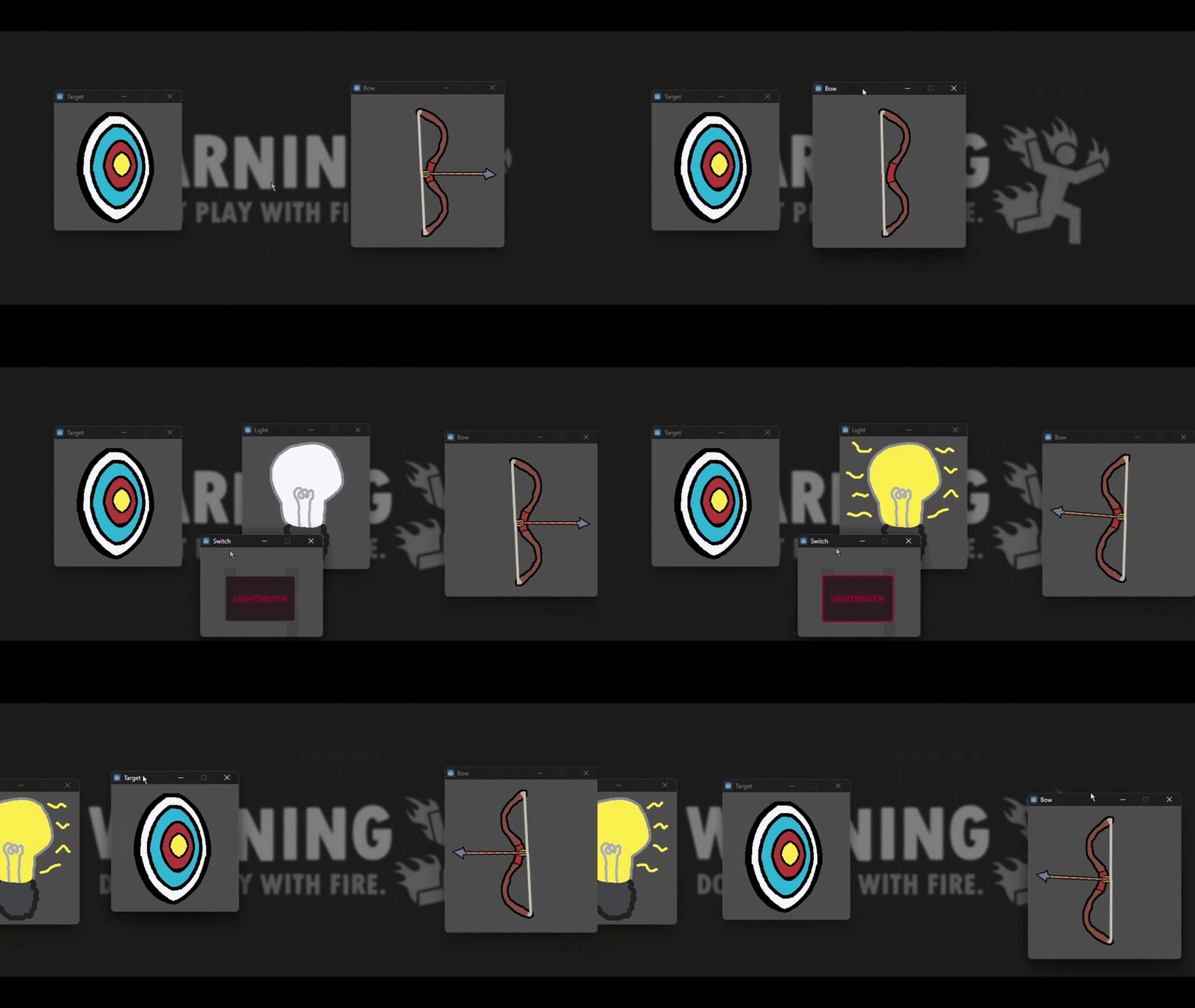
I tried making some puzzles using the windows themselves, such has having to arrange windows to assemble a fractured image.This came after the first lightbulb+ice cube puzzle in my prototype, my idea being to gradually show the player different ways windows could be used. First their positioning matters due to them directly interacting, but now they interact in a different way.It also shows how in this series of puzzles windows can be reused again in a different context, and I am a big fan of reusing elements with new contexts, in puzzles and in design in general.
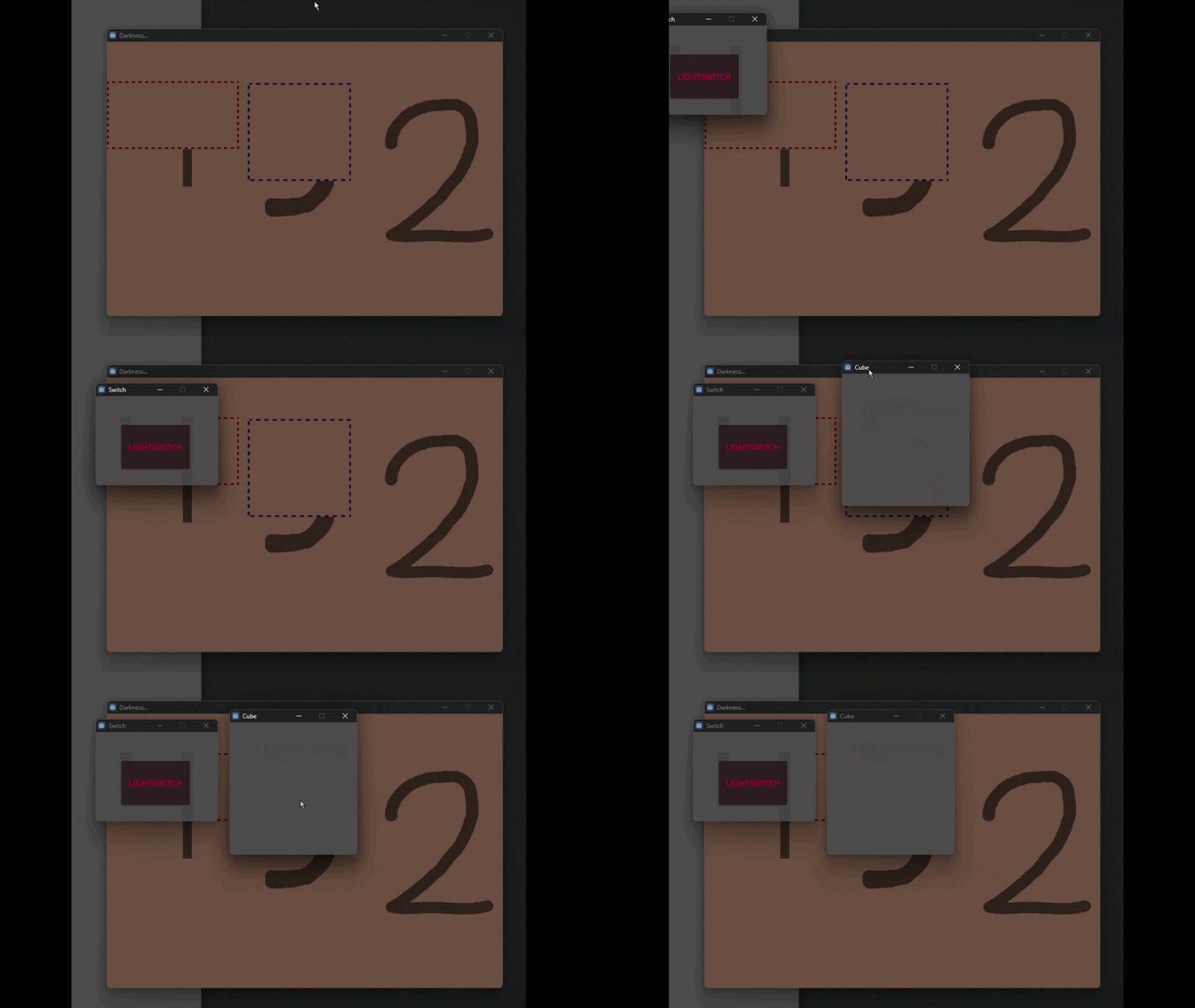
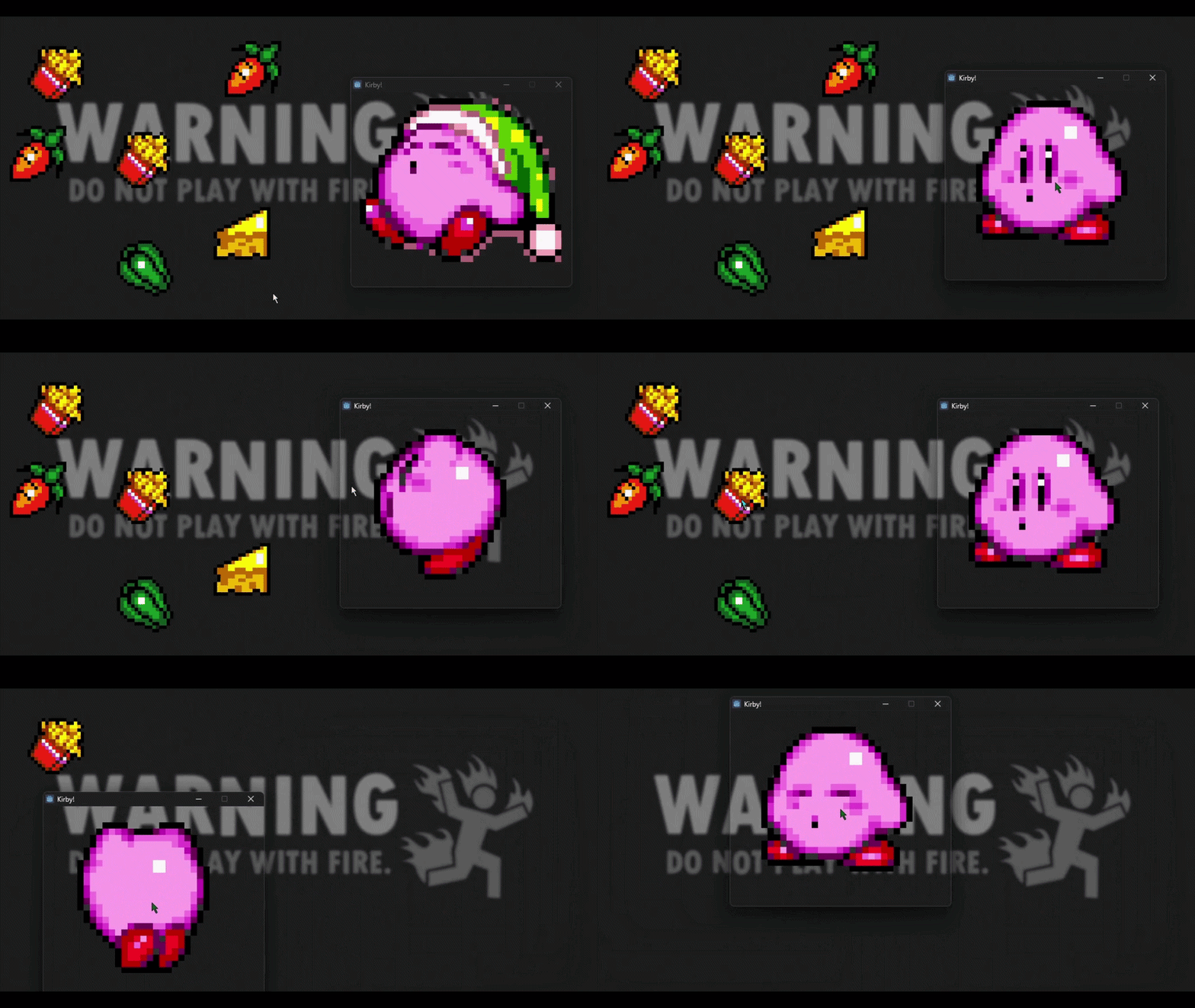
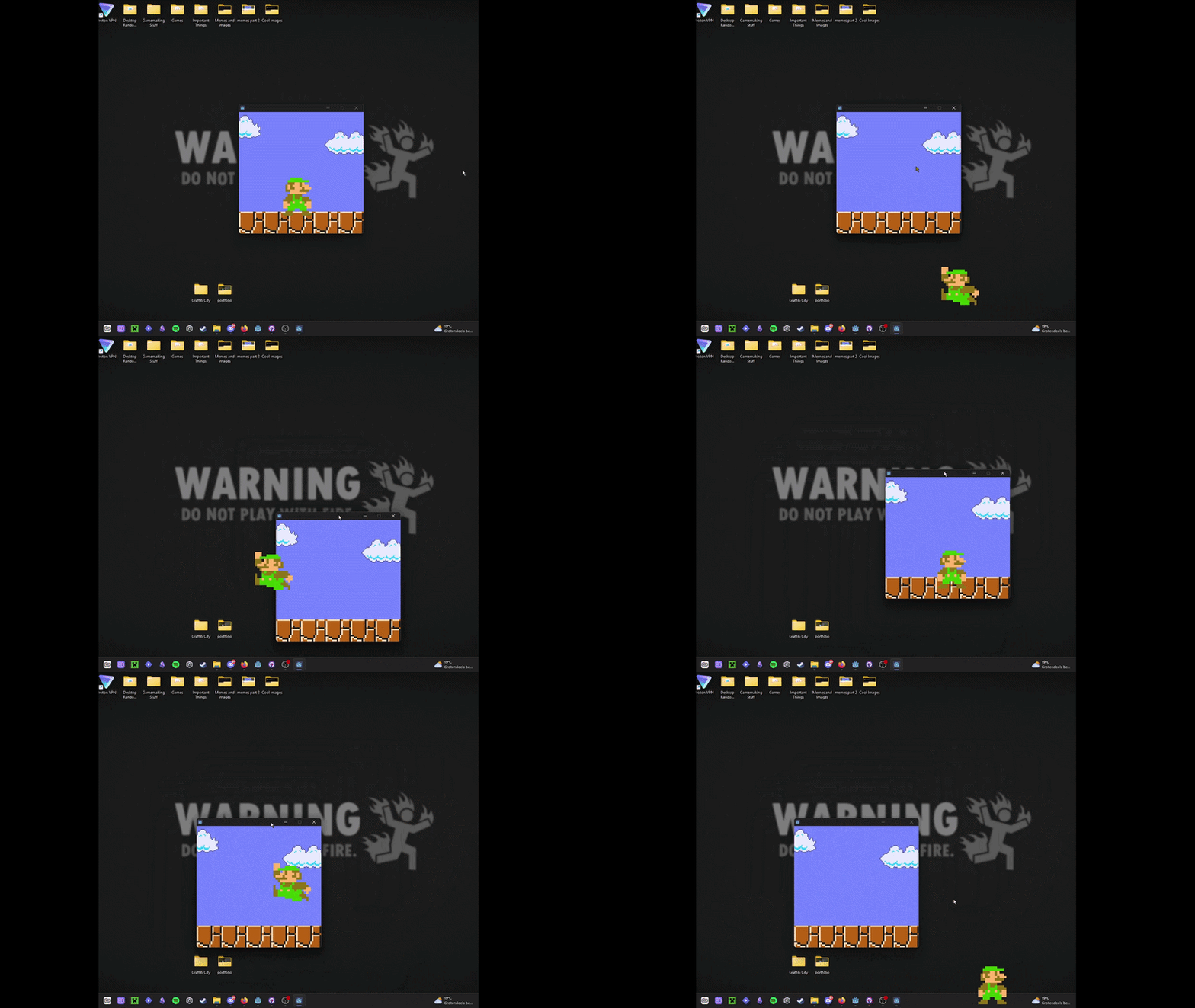
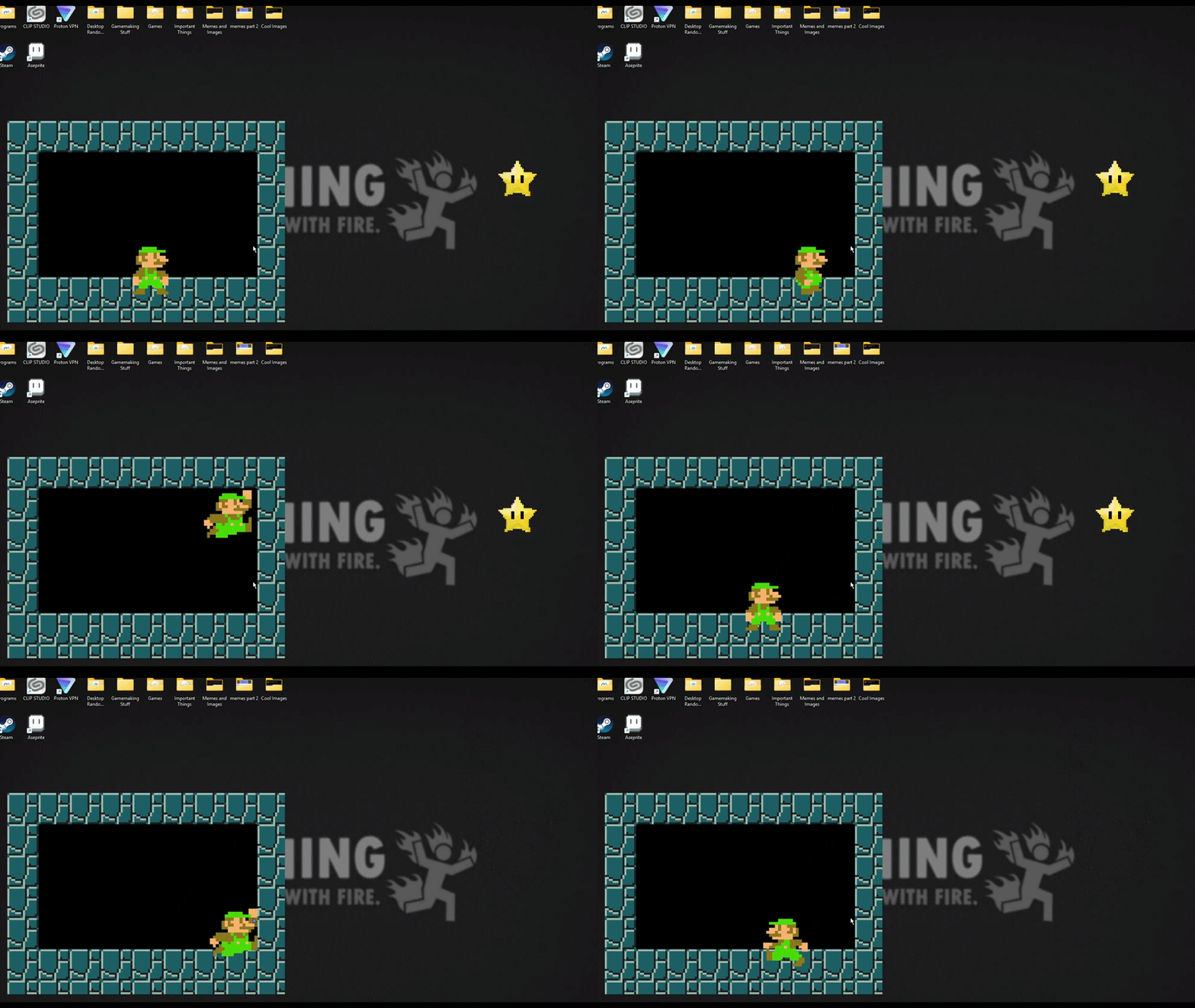
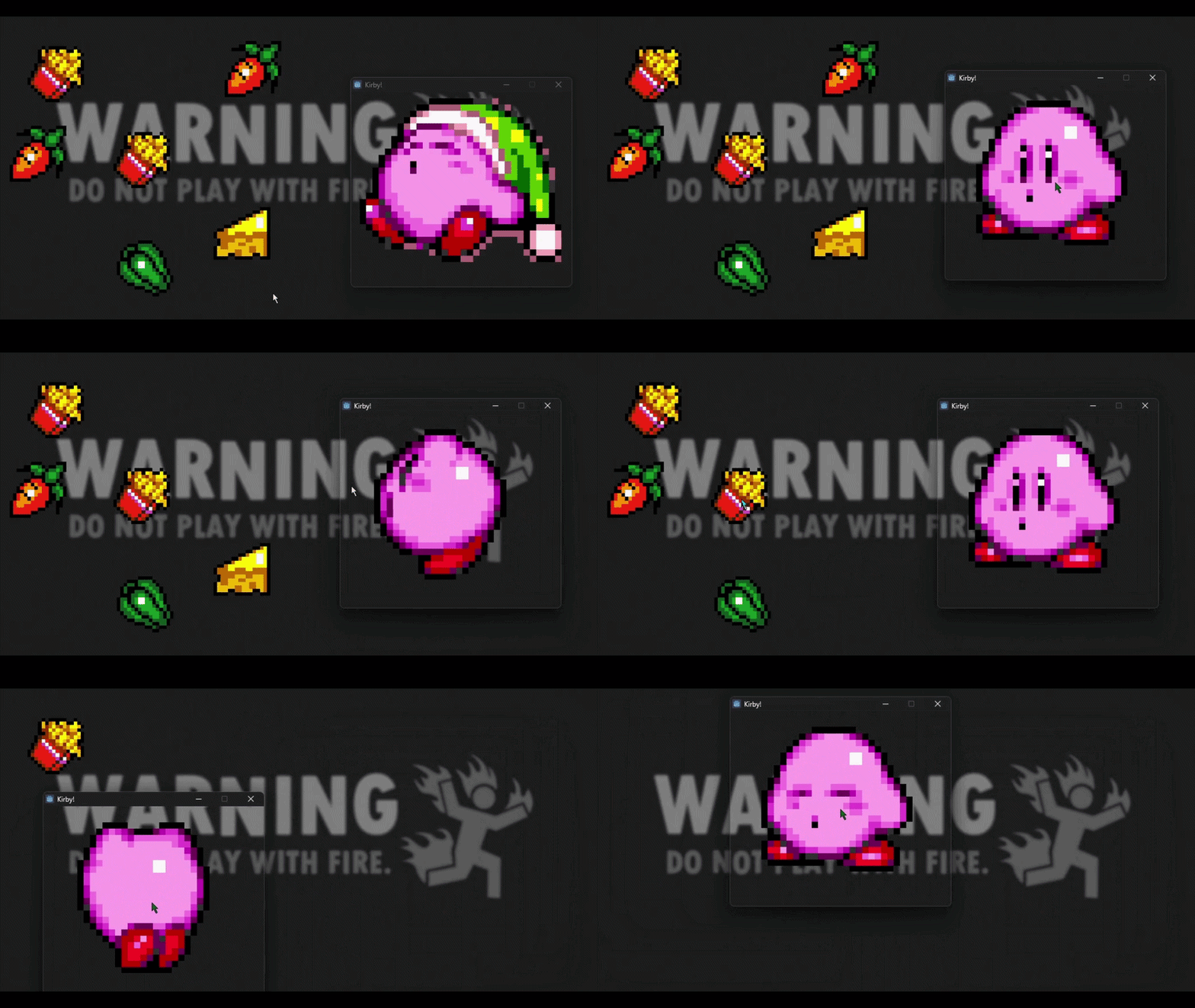
Finally, for my Godotcon presentation, I made a "virtual pet" consisting of a Kirby that you could feed food to, and a small demo with Mario where he could jump in and out of the game window and run around the desktop.
I made these with showing off how window nodes in Godot work to an audience in mind, but they also taught me some useful tricks for making things such as physics and collision work with windows.
SHORT STORIES
I enjoy writing stories, both for games and on their own. I mainly write comedy or horror short stories. Here are some of my favourite pieces of writing I've done:-Settlers of the void I wrote as a challenge to myself to write a story in a single page. It is a story about facing the end alone, both of the world and yourself, and about lost hope. It is grim and contemplative, and I am quite happy with how it turned out.-The closest I have ever been to the sea is an allegorical story about isolation, dysfunction, and loneliness. A captain sails a ship alone with their thoughts, inching ever closer to the sea.
It was a very personal story I wrote to work through difficult feelings, and it started my interest in abtract writing. I enjoy representing a characters' mental state and feelings through metaphors and through unusual writing structure.-The Cave Chicken stories are 5 separate short bedtime stories I wrote for the little sister of someone I know. They are lighter and more comedic in tone than my other stories, and they led me to realize I love writing absurdist light comedy with silly characters.
The stories are about a chicken who lives in a cave, who does not like how everyone keeps asking her why she lives in a cave. They are silly, sarcastic, and light, and I had a blast with them.-The Red Garden is a horror story about obsession and self-destruction, still unfinished with only an initial prologue and an unrelated short piece following on its theme.
Themes of obsession and the horror that comes with being lost to it are a favourite of mine to write. I'm a big fan of writing centered around the psychology/mental state of a character, and this is a great way to explore that.I have more drafts and beginnings of stories as well, which I have not included here. Sometimes when I am idle, waiting in public transport, I'll start having an idea and writing it out, then sometimes developing it further later or not.
GRAFFITI CITY
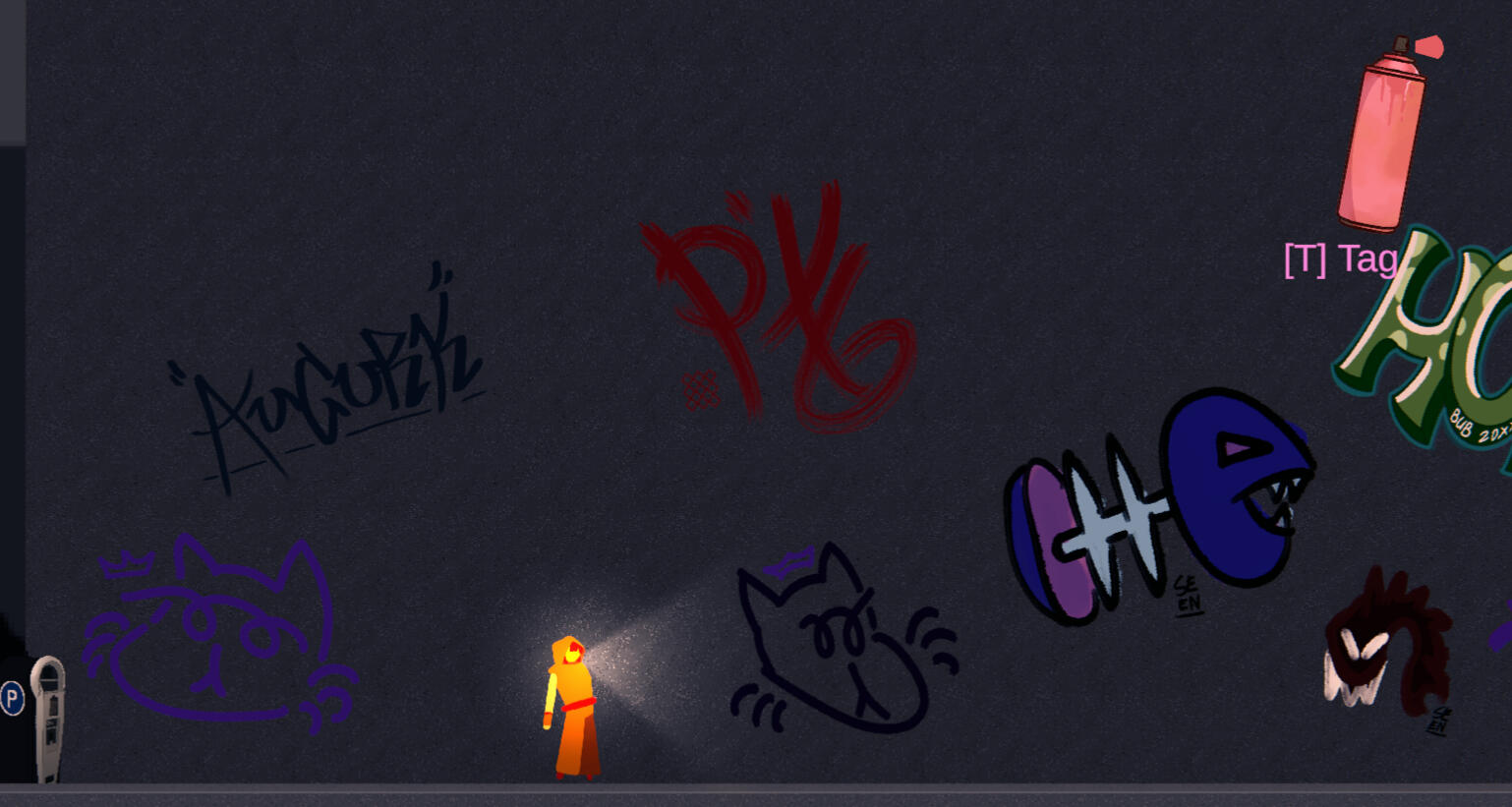
WHAT IS IT?: A 2d narrative puzzle platformer where you play as a graffiti artist who can become graffiti himself, making his way through a city from bottom to top
HOW WAS IT MADE?:
WHAT I LEARNT: I learnt a lot about level design from this game, how to teach game mechanics through level design, pace the player's progress through the game, and communicate a mood/story without words through the level
LINK TO THE GAME: niconickname.itch.io/graffiti-city. To play the prototype I made for the game, click here
MY DESIGN PROCESS
Graffiti City is a narrative platformer with light puzzle elements, playing as a graffiti artist who can turn himself to graffiti. It was made as part of a group project for HKU to make a game based on our trip to Berlin. The theme of graffiti was decided due to it being a recurring motif during our trip everywhere we went in the city.My role was that of lead designer and level designer, as well as co-developer. I designed and built the layout of the entire game and the puzzles, as well as co-designing the mechanics of the game.We started the game with the idea of wanting to make a game about graffiti, and wanting it to be a 2d game due to our artists' specialties.
Our developer, other designer, and I each made a prototype independent of each other to try out some mechanics and see what we all had in mind.

Our Miro board where we figured out what we wanted the game to be
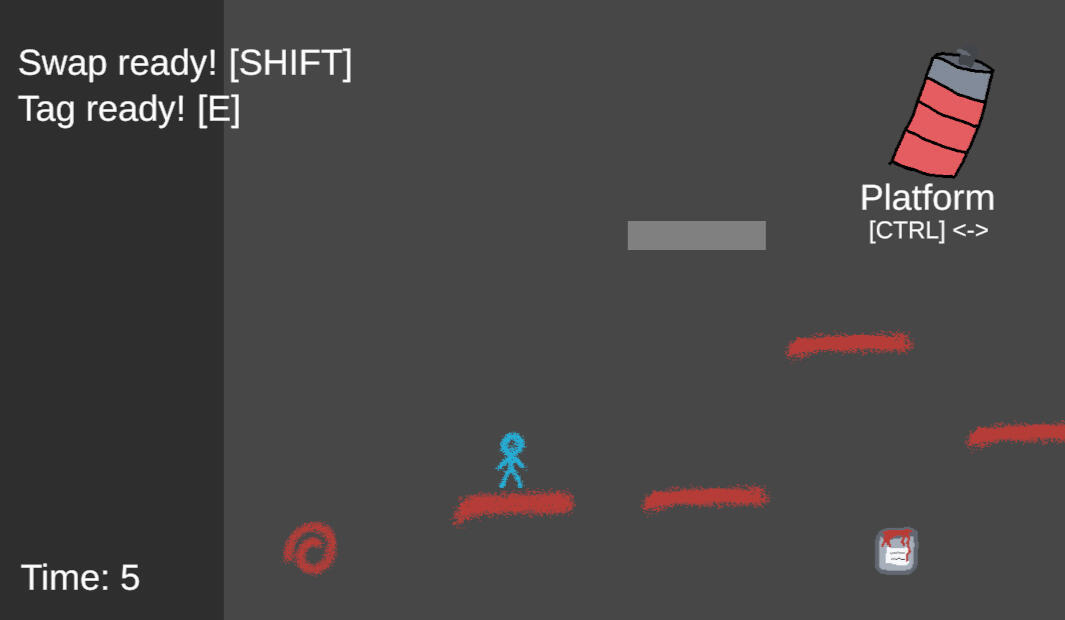
My prototype to test some of the graffiti and platforming mechanics. The ability to place your own platforms did not make it to the full game.


My prototype focused on being able to create graffiti platforms, and being able to turn into graffiti yourself. While in that form, the graffiti is tangible but you go through the regular platforms. We all liked the mechanic of becoming graffiti and being able to make your own graffiti, but the rest of the team wanted to take the game in a more puzzle/narrative game direction.We decided to make the game about the journey of a graffiti artist beginning from the bottom of the city, going all the way up to the top of the highest building, which would be a metaphor for us going from feeling lost and small in Berlin to feeling at home there. Puzzles using graffiti and the ability to place your own tag represent the artist making their own space in the city, and proving themselves to it to earn the right to progress through the city.My job was do design the layout of the entire map, as well as the puzzles and doing some programming.
I begun first drawing out some ideas for puzzles, then an first draft of the layout of the map. These first drafts were meant for myself, so I made them on my notebook, without taking much time to make them legible to others. I like starting with laying out ideas for myself first on paper, before making a digital draft that I can show to the rest of my team.

Puzzle concepts I made on my notebook

Level layout concept on my notebook


After I had enough ideas to start with, I begun laying out a blockout of the level. I started with the overal idea in mind of the player's physical altitude reflecting the stage of the artist's journey, beginning with going lower before ascending higher after each successful puzzle/obstacle resolved. With that concept in mind, I made several set pieces, areas with puzzles or events, or just a specific vibe/theme that it illustrated, and arranged them in sequence with connecting segments in-between. While the mechanics and gameplay were still being worked on, I added notes to the blockout detailing how these set pieces would work, what mood each area should communicate, and other aspects that would be important to the other team members.Once the level's layout was finalized, I worked on adding some camera zoom-ins and zoom-outs to enhance parts of the game. Zooming in when going into graffiti form to emphasize the narrower perspective of being turned two-dimensional, and zooming the camera out gradually while ascending up an elevator to the top of the highest buildings to emphasize the increase in scale and the significance of ascending this high were two moments that benefited a lot from this.

First blockout of the level, with bare decorations/objects
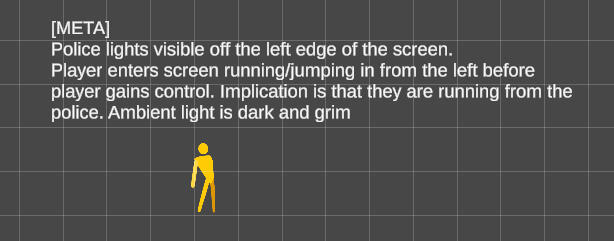
Example of notes I made in Unity about the level blockout


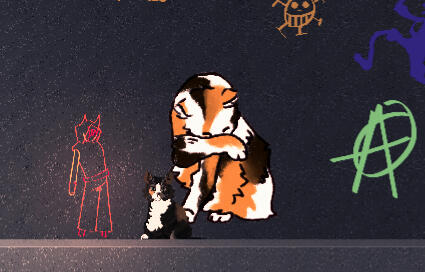
In one of the puzzles, you create a graffiti of a cat to make this cat move away from a door

In another puzzle, you create a graffiti tree to platform your way up


OTHER PROJECTS
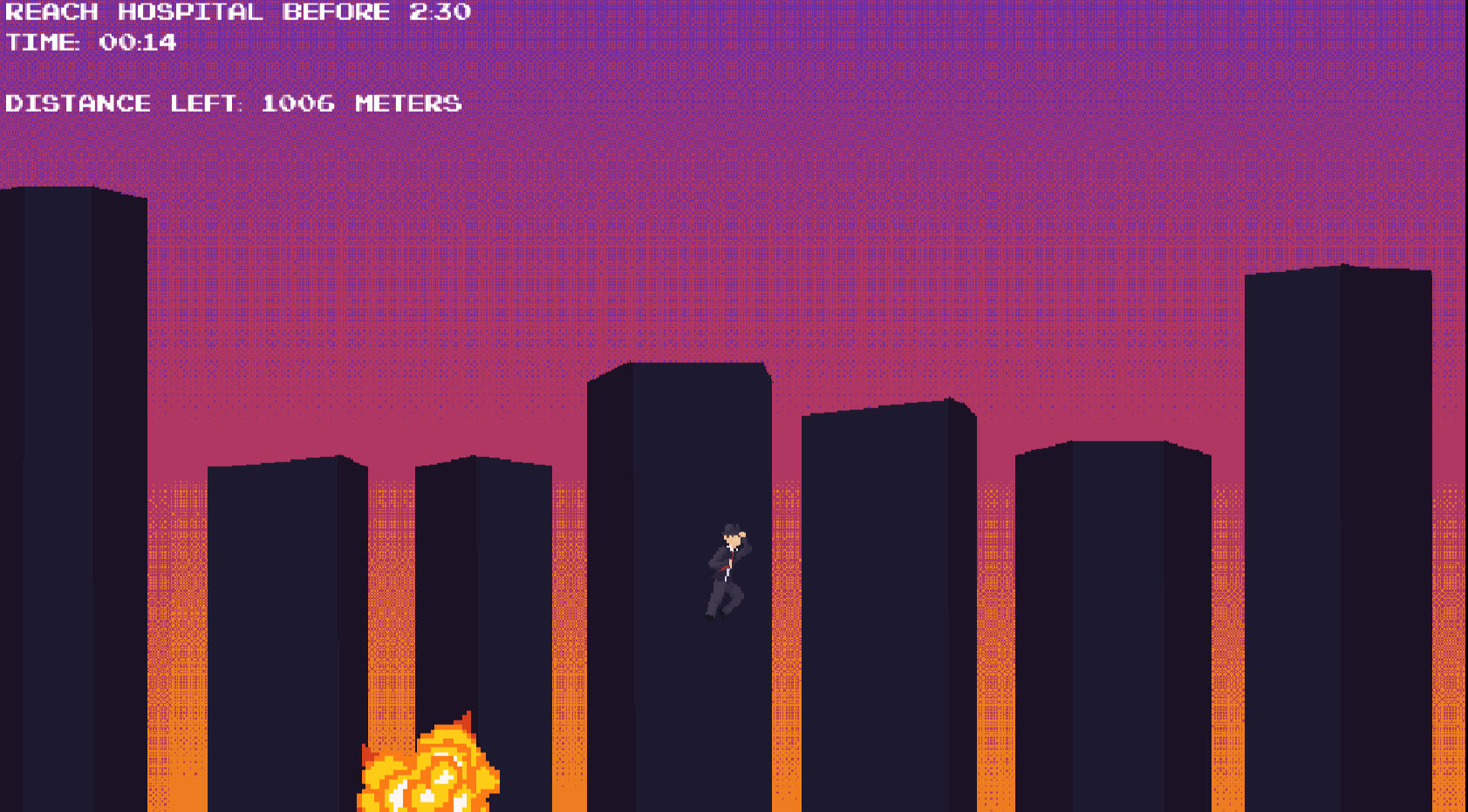
Boom Boom Baby is a small game I made in Godot for a gamejam with friends, where you propulse yourself through the air by dropping bombs behind you. I had been wanting to make a more movement-based game, and this was an idea I had had for a while inspired by rocket jumping in games like Team Fortress 2.
You must make it to the hospital before your wife gives birth, and to make it in time you need to drop bombs behind you to get a boost of speed, propulsing you through the air. With good timing, the player can chain explosions to travel through the air for a long time without slowing down.
Tuesday in Hell is a game made in Godot inspired by Papers Please where you do menial office tasks while in hell, with each day bringing new curses that make your job harder and threatening to get you fired (IE: damned for all eternity). The game was following the theme "Instant Regret", so I added many elements to try to make the player make decisions that they'd regret.
For example, after each day you can choose either a curse or a box that may be empty or contain a worse curse. You are shown what the box contained if you don't choose it, so you can regret not picking it if it is empty. You also win by attempting to get a promotion, with your chance to get it increasing each day, but giving you a game over if you fail, trying to get the player to risk it and go for the promotion or risk it and play more days with the difficulty still increasing.Unique curse effects keep the game interesting and evolving. Letters may come in the wrong colors, buttons may switch places, the computer may crash, or letters may get jammed in the mailboxes and require a push.

The player uses the number keys to send letters and the mouse on the computer screen.

Between stages, the player gets an evaluation, and a choice of either a curse or a mystery box

Regardless of which option the player picks, the box is always revealed.


Wasteland Junk Brawl is a wave survival game made in Unity where you collect scattered items to build combos to attack constantly spawning enemy hordes. It was inspired by Vampire Survivors, and based on a card game (Junk Cards) I made as part of an assignment for HKU. The player runs around a wasteland, collecting three types of items to perform attacks which vary depending on which combination of items was collected: Oil to shoot fireballs, uranium for a radiation blast, and wires for a lightning attack.

Hordes of enemies spawn constantly

Collecting different items lets you performed an attack with their combined attributes


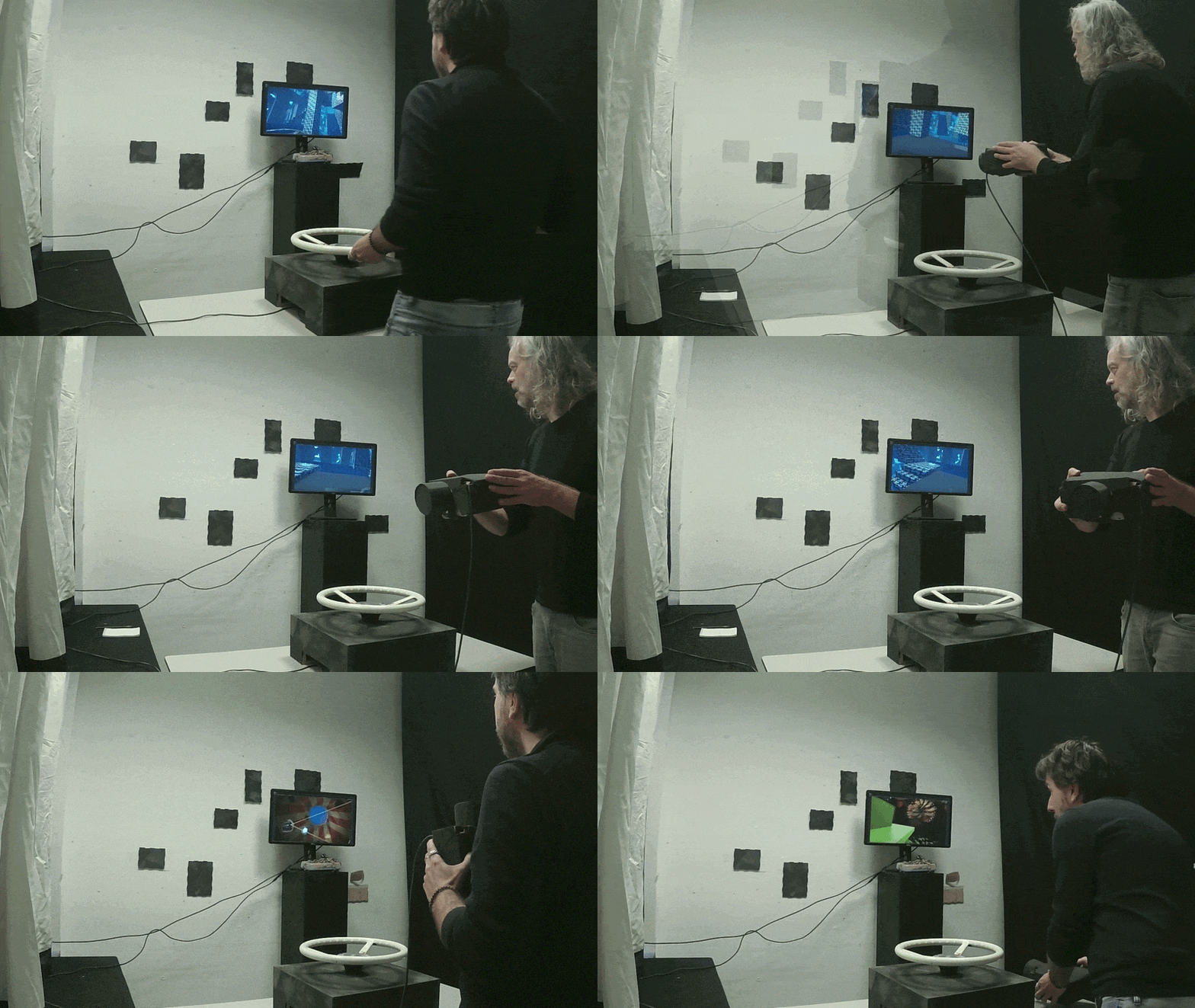
Super Secret Dimensional Project was a mixed reality Unity game I worked on during a team project at HKU. In the game, the player has a camera that projects a view of the room they're in but in a different reality. They can move the camera around the room and look around the other dimension on the screen, and interact with a physical wheel which has an equivalent in the screen that changes things in the dimension when turnt. We added many extra touches to the room to improve immersion, such as a "scientist" (played by me) guiding the player in the experience, and various props.The game works by having a VR headset inside of the "camera", with its position tracked inside the scene on the screen, essentially making thing a VR-less VR game. I worked on the gameplay and narrative design of the game together with other designers, playtesting and iterating on the design, as well as on the physical wheel that the player uses to interact with the game.
We went through a few iterations of the gameplay loop, first testing having the player take pictures of the other dimension instead of having a constant video feed, but we found that taking pictures was distracting, and less immersive in the end than our final version.